WHAT IS A CABINET OF CURIOSITIES? THE HISTORY BEHIND THE WUNDERKAMMER
A room filled with strange objects.
A drawer containing delicate insects.
Fossils, shells, bones and botanical specimens.
An unusual painting hanging beside an animal skull.
A beautiful object sitting next to something that makes you slightly uncomfortable.
This might sound like the inside of Evil Eye Curiosities.
But the idea is much older.
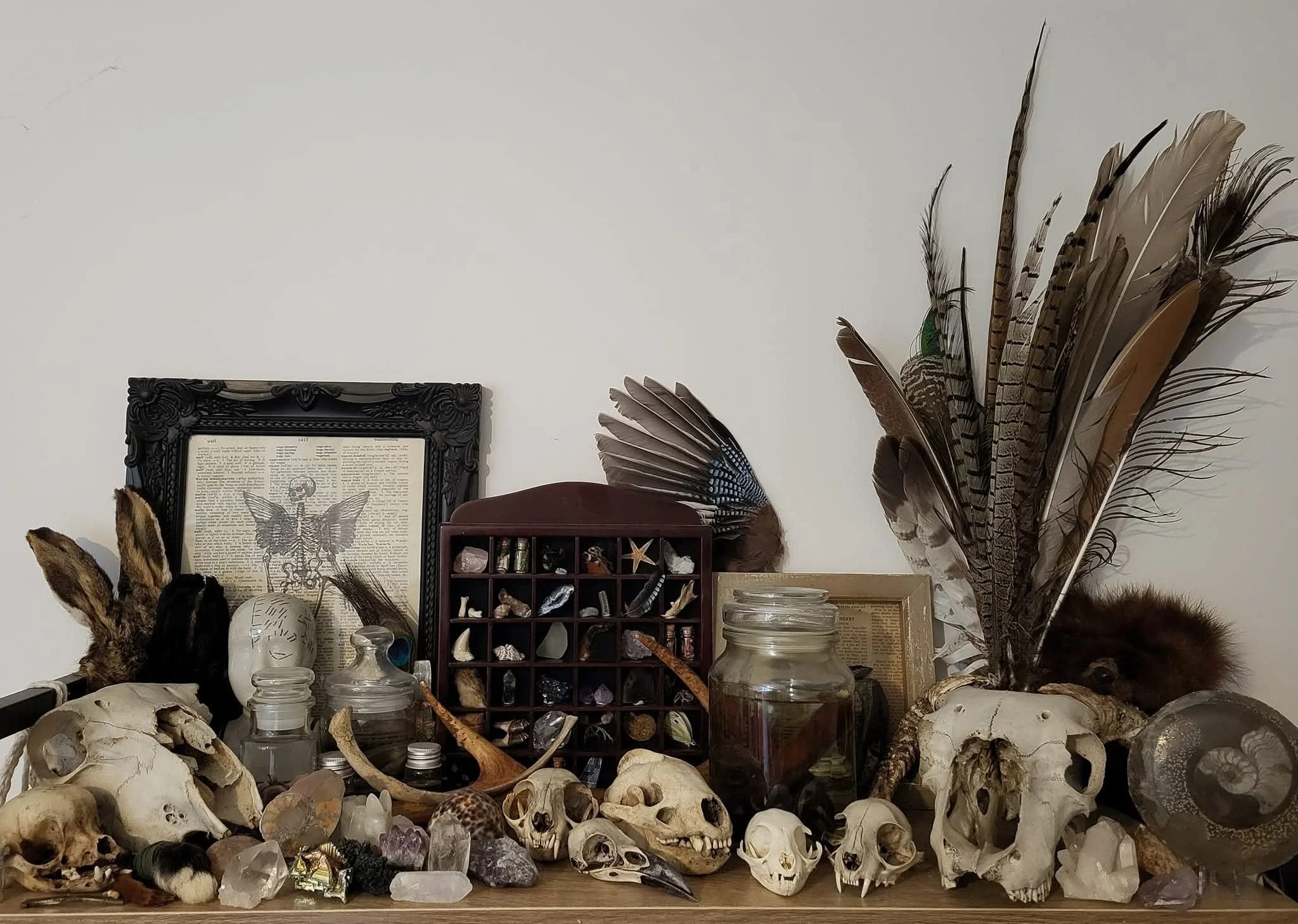
My shelf of treasures in my office
Long before modern museums, collectors created their own cabinets of curiosities — fascinating collections of objects gathered together to explore the strange, beautiful and unexplained world around them.
Known in German as a Wunderkammer, or "room of wonder", these collections were places where art, science, natural history and the unusual could exist side by side.
And in many ways, they were the original natural-history collections.
What Exactly Was A Cabinet of Curiosities?
Despite the name, a cabinet of curiosities wasn't necessarily a single piece of furniture.
Some were quite literally cabinets filled with drawers and compartments.
Others were entire rooms.
Wealthy collectors, scholars, physicians, artists and explorers might fill their collections with objects that fascinated them.
There were few strict rules about what belonged.
That was part of the fun.
A collection might contain:
- Insects and butterflies
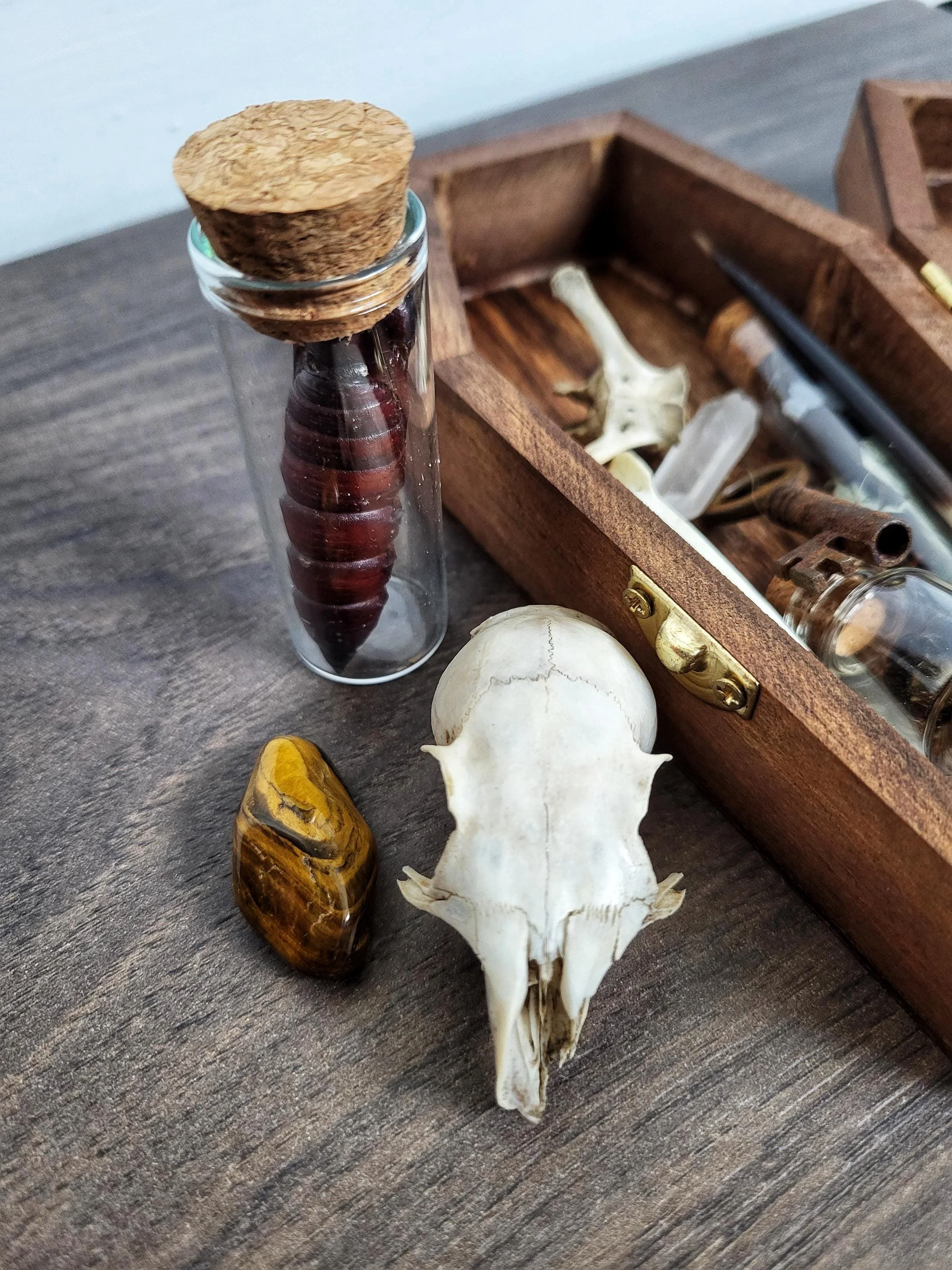
- Animal bones and skulls
- Fossils and minerals
- Shells and coral
- Dried plants
- Taxidermy
- Scientific instruments
- Paintings and artworks
- Ancient objects
- Coins and manuscripts
- Unusual natural formations
- Objects brought back from distant places
The important thing wasn't necessarily monetary value.
It was wonder.
The Original Rooms of Wonder
Cabinets of curiosities became particularly popular in Europe during the Renaissance and early modern period.
At a time when the natural world was still full of mysteries, collecting unusual objects was a way of trying to understand it.
Imagine living hundreds of years ago and discovering a strange shell from another continent. Or a fossil embedded in stone. Or an enormous insect unlike anything you'd seen before. Or the skull of an unfamiliar animal.
Without modern museums, photographs, databases or the internet, physically possessing these objects could be a way of studying them.
Your collection became your own little window into the wider world.
Where Science Meets The Strange
One of the most fascinating things about cabinets of curiosities is that they didn't always separate science from superstition in the way we might today.
An unusual natural object could be collected because it was scientifically interesting, beautiful, mysterious or simply strange. The boundaries between natural history, art and folklore were much more fluid.
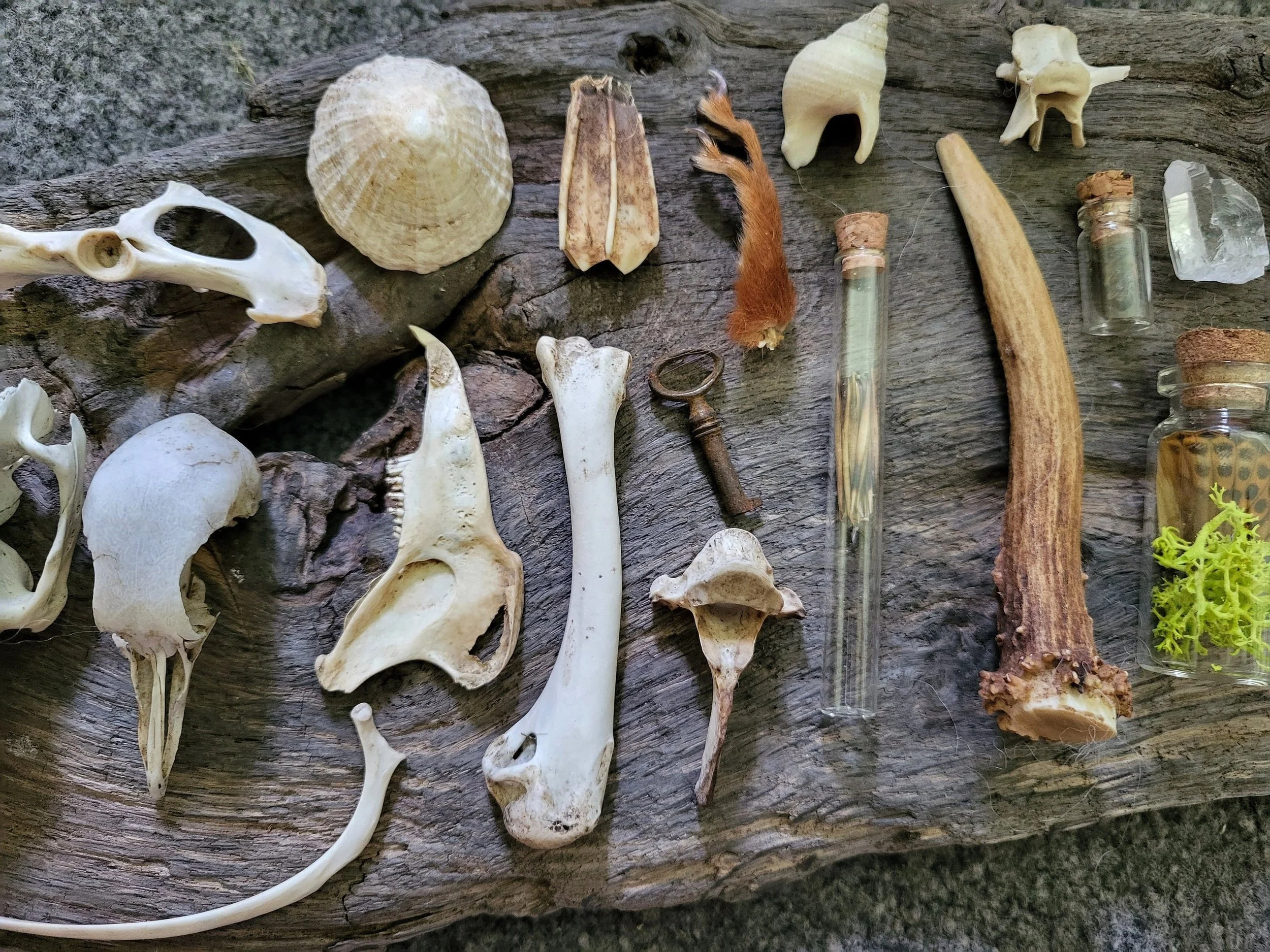
A cabinet could therefore contain objects that seem completely unrelated to us today.
And that mixture is exactly what makes them so fascinating.
From Cabinets To Museums
Over time, the way people collected and organised knowledge changed.
Collections became increasingly systematic. Objects were classified. Specimens were labelled. Natural-history collections became more specialised.
Eventually, many private collections became the foundations of museums and scientific institutions.
The modern museum owes part of its history to these earlier collections of wonder.
The cabinet of curiosities helped create the idea that the natural world could be collected, studied, displayed and shared.
But something important was lost along the way.
The sense of mystery.
Why Are We Still Fascinated By Them?
Today, we have access to more information than any previous generation. We can identify an insect in seconds. We can see photographs of animals from the other side of the world. We can explore museum collections without leaving our homes.
And yet, people still love physical objects.
There is something different about holding a fossil in your hand. Looking closely at a real butterfly. Examining the texture of a piece of bone. Opening an old drawer and discovering something unexpected inside.
A photograph can tell you what something looks like.
A specimen allows you to really look at it.
The Natural History Cabinet
For me, insects, skulls and bones are at the heart of my cabinet.
Of course insects are my passion, butterflies and moths are incredibly intricate. Their wings are covered in tiny scales. Their colours and patterns can be extraordinary. Even familiar species can reveal details that you might never notice when seeing them flying past. Framing a specimen allows those details to become part of the display. Instead of disappearing into the undergrowth or flying away into the night, the insect becomes something you can study and appreciate. It becomes a small piece of natural history.
But my collection doesn’t stop at insects!
A modern cabinet of curiosities doesn't need to follow the rules of a traditional natural-history collection.
That's one of the things I love about the concept.
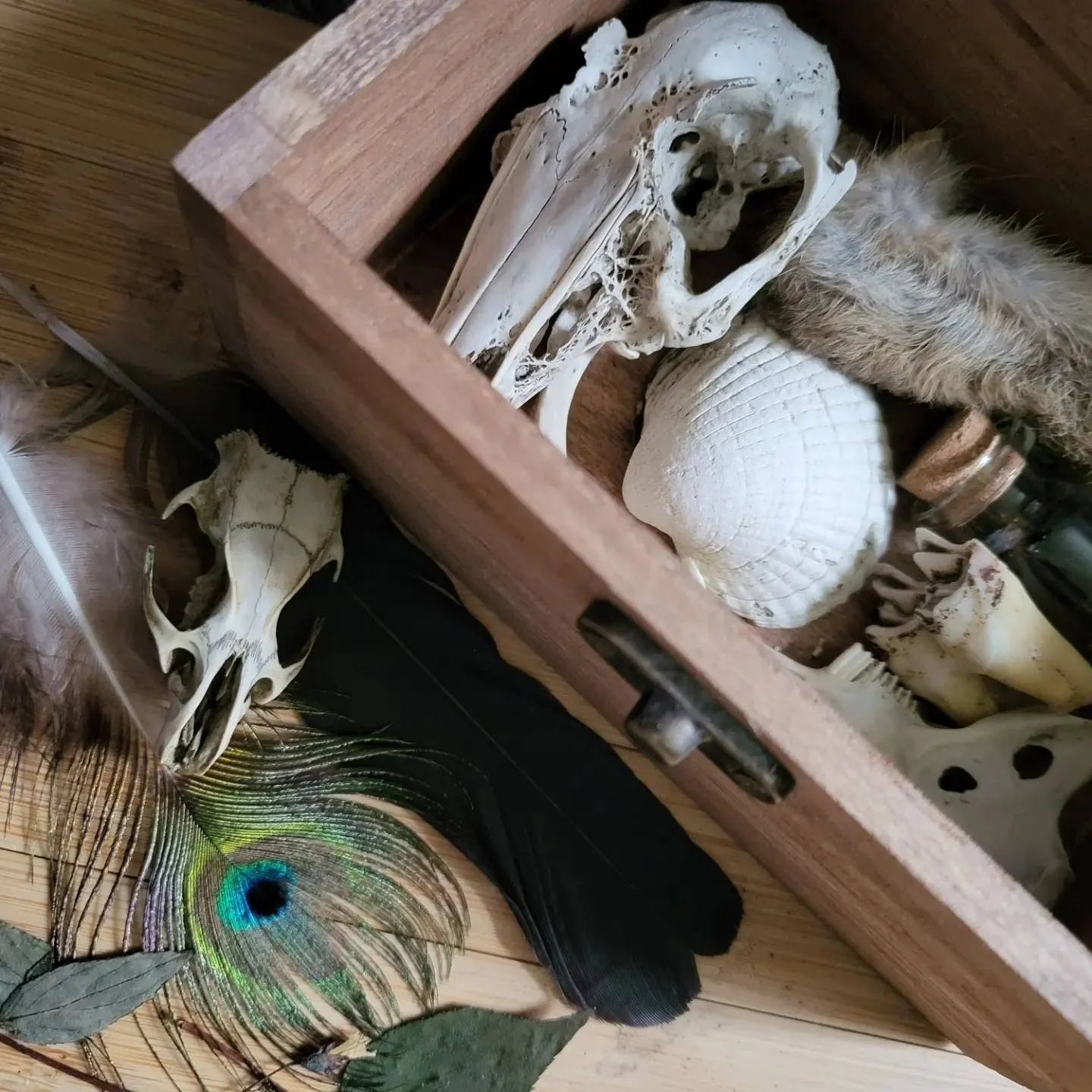
My collection of curiosities is chaotic. I have a wall of framed insect specimens and insect art, my collection runs through my entire house, there are deer skulls mounted on the walls, vases of bird feathers and bowls of fossils, sheep skulls, fox skulls, rabbit skulls and even cat skulls on various shelves - there is something in every room.
You might have a framed moth sitting beside an antique object. A shell beside a fossil. A skull beside a botanical specimen. A collection of old photographs beside a box of strange little finds.
There doesn't have to be a perfect explanation for why everything belongs together.
It belongs because you find it fascinating.
The Beauty of The Unusual
There is also something wonderfully liberating about collecting unusual things.
Not everything has to be conventionally beautiful. Some objects are fascinating because they're strange. Some are beautiful because they're imperfect. Some make you curious. Some make you slightly uncomfortable. And some simply make you ask:
"What is that?"
That's often enough.
Creating Your Own Cabinet of Curiosities
You don't need a grand Victorian cabinet to create your own collection.
In fact, you don't even need a cabinet. A shelf can become a cabinet of curiosities (go right back to to the start of this blog, that’s my chaotic shelf in my office filled with some of my favourite treasures, it grows and changes constantly, forever adapting). So can a bookcase, display case, shadow box or collection of drawers. You could start with a single object that means something to you. Perhaps a framed butterfly. A shell you found on a beach. A fossil. A dried botanical specimen. An antique object. A beautiful stone. Or something strange that you simply couldn't leave behind.
My find was a single sheep skull. That’s how it all started.
Then let the collection grow naturally.
There Doesn't Need To Be A Strict Theme.
Your cabinet should reflect your curiosity.
Start with one object
One of my favourite things about collecting is that you don't need to start with a huge collection.
One specimen can be enough.
Perhaps you've always loved butterflies. Start with one.
Maybe moths are more your thing. Choose one that catches your eye.
Or perhaps you're fascinated by bones, fossils, antique objects or strange natural-history specimens. Start there.
Over time, your collection develops its own character.
And eventually you may find yourself surrounded by objects that each have their own story.
The Modern Cabinet
This is what I want Evil Eye Curiosities to be.
A modern cabinet of curiosities.
A place where entomology, natural history, art, oddities and the unusual can sit together.
Not everything has to be serious. Not everything has to be rare. And not everything has to have an obvious purpose. Sometimes something is worth keeping simply because it makes you curious.
That's the spirit of the Wunderkammer that still appeals to me today.
Why I Call It A Cabinet
There is something special about the word cabinet.
It suggests hidden drawers. Secret compartments. Things waiting to be discovered. A collection that rewards curiosity.
And that's exactly how I want Evil Eye Curiosities to feel.
Not just a shop.
Not just a collection of products.
But somewhere you can wander through and discover something you didn't know you were looking for.
From My Cabinet To Yours
Every collection starts somewhere.
Mine began with a single sheep skull I found while hiking on the North Yorkshire moors and it has continued to grow into something much broader:
Framed butterflies. Moths. Insects. Oddities. Bones. Skulls. Feathers.
And plenty of strange little treasures along the way.
Some are beautiful. Some are unusual. Some are a little macabre.
But they all have one thing in common:
They make you look twice.
And perhaps that's the most important part of a cabinet of curiosities.
It isn't really about the objects.
It's about the curiosity they create.
Your Own Little Room of Wonder
You don't need to be wealthy. You don't need an enormous collection. You don't need a Victorian cabinet.
You simply need something that makes you wonder.
Start with one object.
Look closely.
Learn its story.
Then perhaps find another.
Before long, you might have created something entirely your own.
A collection of things that tell stories about the natural world, history, art and the wonderfully strange things that exist around us.
A little room of wonder.
And that's what a cabinet of curiosities has always been about.
---
Explore the collections at Evil Eye Curiosities, from framed butterflies, moths and insects to curiosities, oddities, natural-history pieces, vintage treasures and DIY entomology supplies.

And if you're building your own collection, remember:
There are no rules for curiosity.
Look closely.
Keep wondering.
And always leave room for one more strange little treasure.
