HOW TO CARE FOR YOUR FRAMED SPECIMENS
A Little Care Goes A Long Way…
There is something rather special about bringing in a piece of natural history to your home.
A beautifully preserved butterfly or moth can become a striking piece of artwork, but unlink a print or photograph, your specimen is a natural object. It deserves (and needs) a little care and consideration to keep it looking it’s best.
The good news?
Caring for your framed specimen is relatively simple.
Follow a few basic rules and your specimen can remain a beautiful part of your collection for many years.
Where Should I Display My Specimen?
The most important thing to consider is light.
Although your specimen may look incredible in a sunny window, direct sunlight can gradually cause natural colours to fade over time.
For the best long-term preservation, display your frame somewhere:
Away from direct sunlight
Away from radiators and heat sources
Away from areas with significant fluctuating temperature changes
Somewhere reasonably dry and stable
Where is can be admired without being constantly handled
A wall away from a bright window is usually a good choice.
Think of your specimen as you would an original piece of artwork - somewhere visible, but protected from harsh environmental conditions.
Avoid Direct Sunlight
This deserves it’s own mention because it is one of the easiest ways to protect your specimen.
Natural light contains UV radiation, which can gradually affect the pigments and cause the colours in your specimen to fade over time.
Even specimens with naturally vibrant colours can become less intense over time if they exposed to strong sunlight.
So while a little natural daylight is absolutely fine, avoid placing your frames in areas that receive strong, direct sunlight for long periods.
What About Humidity?
Insects are naturally affected by their environment, so excessive moisture, and humidity aren’t ideal for preserved specimens.
Try to avoid displaying your framed in places where there is a lot of steam or moisture such as beside a bath or shower or close to a kettle or cooker
While your bathroom or kitchen may look like the perfect place for a dramatic moth frame, the humidity and temperature changes can create an environment that isn’t ideal for long-term preservation.
A stable, dry indoor environment is preferable.
How Do I Clean The Glass?
Over time, your frame may collect a little dust or you may accidently leave fingerprints on the glass while unpacking or hanging it.
That’s an easy fix!
Use a soft, lint-free cloth to gently clean the outside of the glass.
If you need more cleaning power, apply a small amount of suitable glass cleaner to the cloth rather than spraying directly on to the frame.
A Little Evil Eye Tip…
If you’ve purchased one of our framed specimens, you’ll receive an alcohol wipe with your frame. This can be used to gently clean fingerprints from the glass after unpacking or hanging your framed specimen.
Always take care not to allow liquid to enter the frame itself.
Should I Open The Frame?
Generally, no.
Your specimen has been carefully mounted and enclosed to protect it from dust, handling and potential pests.
Opening the frame unnecessarily can expose the specimen to the outside environment and creates an opportunity for damage.
If there is ever a problem with your frame, get in touch with us before attempting to dismantle it yourself.
What About Pests?
One of the biggest concerns people have when they begin collecting natural history specimens is pests.
Certain insects can damage preserved specimens, particularly if they are able to get inside a frame.
This is another reason why keeping the frame sealed and in good condition is important.
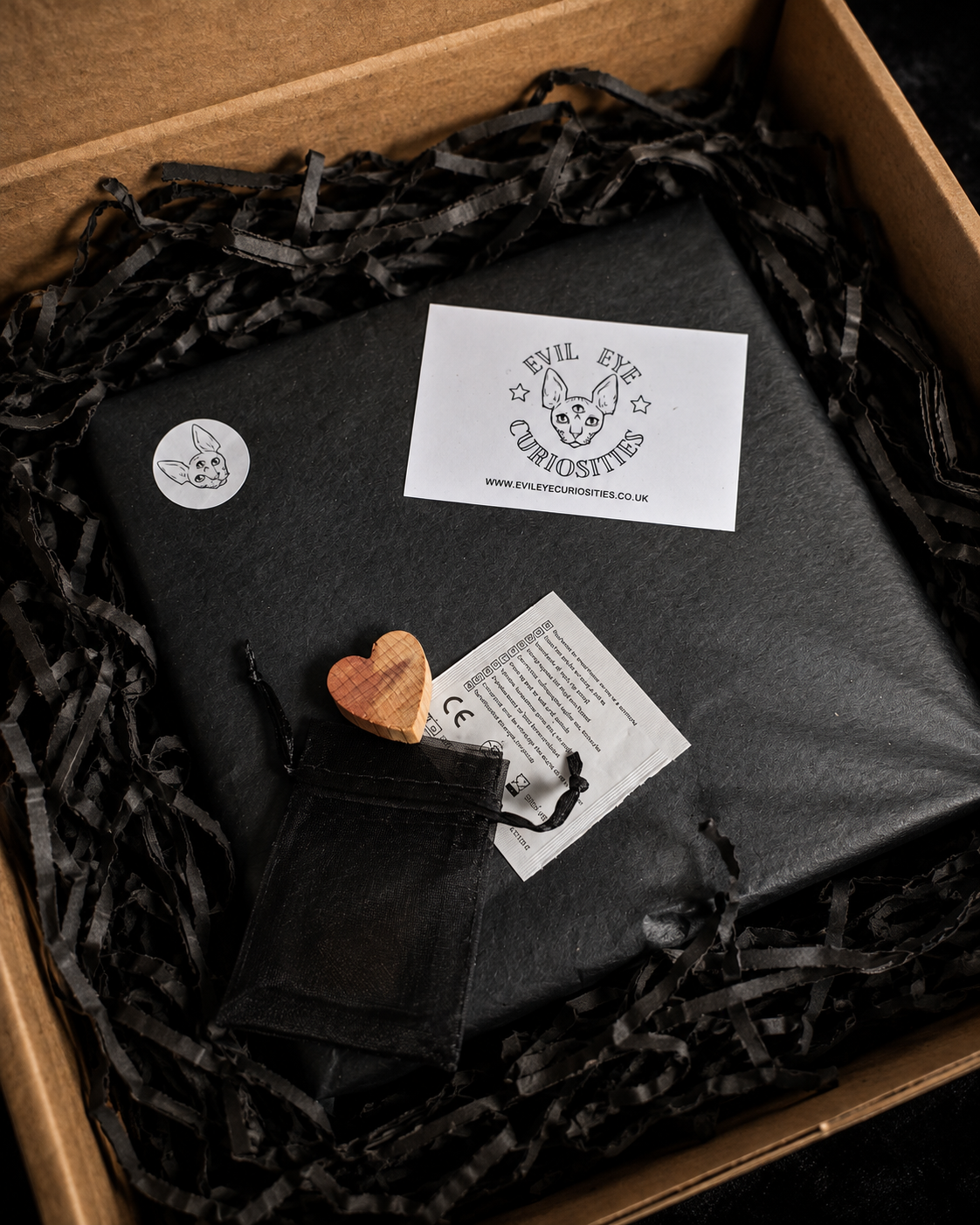
As an additional precaution, we include a small natural cedar wood heart with our framed specimens.
Cedar is traditionally used as a natural deterrent against some pests that can damage natural history collections. While it shouldn’t be considered a guarantee against infestation, it’s a lively little addition to your specimen’s care kit.
There are other products available on the market such as moth balls and taxidermy sprays - it is worth doing some research to find something which works for you if you want to take additional precautions towards protecting your specimens.
If you ever notice something unusual around your specimen or suspect pest activity (notice what looks like dirt around your specimen, notice what look like small pupae casings, notice your specimen looks like it’s being eaten or something else!), don’t panic and don’t immediately open the frame. Contact us for advice.
What If My Specimen Isn’t Perfect?
This is something particularly important to us at Evil Eye Curiosities.
Natural specimens aren’t manufactured objects.
A moth may have a slightly imperfect wing. A butterfly might have a snapped antennae. Some specimens may have imperfections that they emerged with, others may have damage with occurred during their natural life cycle.
These details don’t necessarily detract from the specimen.
In fact, we often think they add character. It’s part of their story.
Nature isn’t perfect - and that’s part of the beauty.
An imperfect specimen can still be fascinating, beautiful and worthy of preservation.
What Should I Do When My Frame Arrives?
When your frame arrives, unpack it carefully and inspect the packaging before disposing of it (or keep it to be reused again! we love reusing and recycling!).
Handle the frame by it’s edges rather than pressing against the glass.
If you’ve touched the glass while unpacking, use the supplied alcohol wipe or a suitable soft cloth to remove fingerprints.
When hanging the frame, make use the fixing is secure and appropriate for the weight of the piece and the wall you are mounting it on.
Then step back…
And admire your new little piece of natural history.
How Long will My Specimen Last?
There isn’t a single answer for this because natural history specimens are affected by their environment and how they are cared for.
However, with sensible display conditions, protection from direct sunlight, stable humidity and careful handling, a properly prepared and framed specimen can remain a beautiful part of a collection for many years.
The most important thing is simple to protect it from the things that can cause deterioration.
Keep it dry.
Keep it out of direct sunlight.
Keep it safely enclosed.
And try not to handle it too much.
Creating Your Own Cabinet
You don’t need an entire Victorian curiosity cabinet to start collecting natural history.
A single butterfly on a bedroom wall.
A beautiful moth above a desk.
A small collection of insects displayed in a gallery wall.
A shelf curiosities gathered over time.
Your collection can be as large or as small as your like
If you want a collection of entomology displays, taxidermy and oddities spilling into every room - I say go for it!
That’s one of the things I love about natural history collecting - there isn’t really a right way to do it.
It’s about finding the specimens and curiosities that make you stop and look a little closer.
A Final Word From Evil Eye Curiosities
Every specimen has a story.
Some are stories of transformation. Some are stories of survival. Some are simply reminders of the extraordinary natural world that exists around us.
By caring for a specimen properly, you’re helping preserve that little piece of natural history for years to come.
So find a suitable place, keep it away from harsh sunlight, give the glass an occasional clean…
And let your little piece of the natural world become part of your cabinet
Looking For A Specimen Of Your Own?
Explore the Evil Eye Curiosities collection of framed butterflies, moths and insects, or discover or DIY Pinning Kits if you’d like to begin creating your own natural history collection.
Welcome To The Cabinet.
