When most people think about moths, they probably imagine a small brown insect fluttering around a light.
Perhaps one that appears in the kitchen cupboard. Perhaps one that gets swatted away without a second thought.
But Britain's moths are so much more interesting than that.
From enormous hawkmoths to tiny leaf miners, our moths come in extraordinary shapes, colours and patterns.
Some are brightly coloured. Some are almost impossibly well camouflaged. Some fly during the day. Others only emerge after dark. And many spend most of their lives hidden from us entirely.
Welcome To The Strange World of British Moths
How many moths are there in Britain?
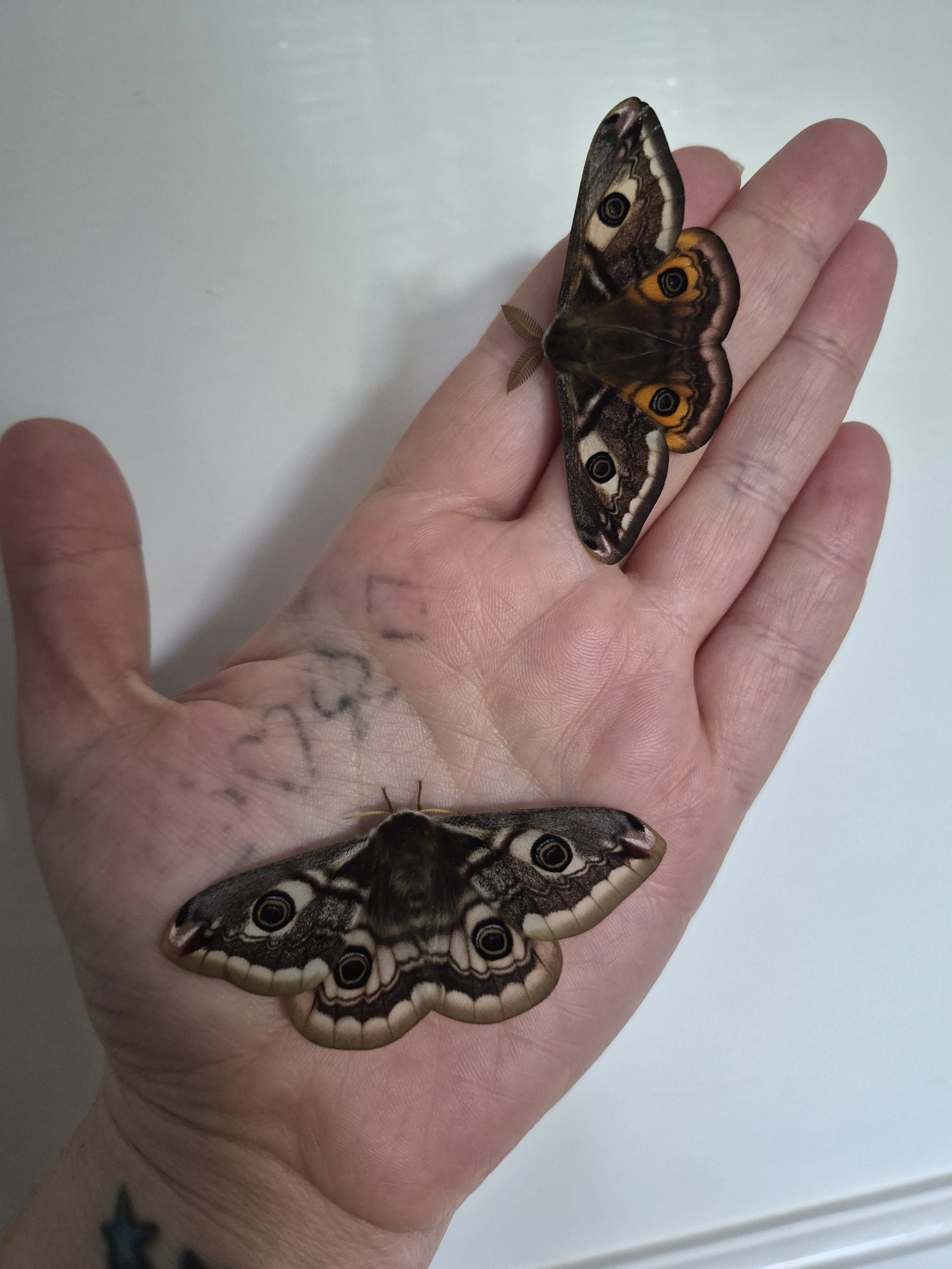
Male & Female Large Emperor Moth
Britain is home to a remarkable diversity of moth species. There are thousands of species recorded across the British Isles, ranging from tiny micro-moths to some of our largest and most spectacular insects. And yet, most people will only ever notice a tiny fraction of them. That's partly because many moths are nocturnal, but it's also because they're exceptionally good at hiding. A moth resting against tree bark can become almost invisible. Another may resemble a dead leaf. Some blend into lichen-covered walls, woodland floors or grasses. You could walk past dozens without ever realising they were there.
Moths Aren’t Just Little Brown Butterflies
This is probably the biggest misconception about moths.
Moths can be brown, of course.
They can also be green, pink, orange, white, silver, yellow, black and almost every combination in between. Some have spectacular eyespots. Others have metallic markings. Some are furry. Some are incredibly delicate. And some look so unusual that, if you weren't told they were moths, you might struggle to believe it.
The diversity is enormous.
The Hawkmoth: Britain’s Moth Celebrities
If there is one group guaranteed to make people stop and look, it's the hawkmoths.
These are large, powerful moths with streamlined bodies and impressive wings.
Several species can be found in Britain, including the Elephant Hawkmoth, Poplar Hawkmoth, Privet Hawkmoth, the extraordinary Deaths head Hawkmoth and the mesmerising Hummingbird Hawkmoth.
Elephant Hawkmoth
The Elephant Hawkmoth is one of Britain's most recognisable moths (and my favourite!).
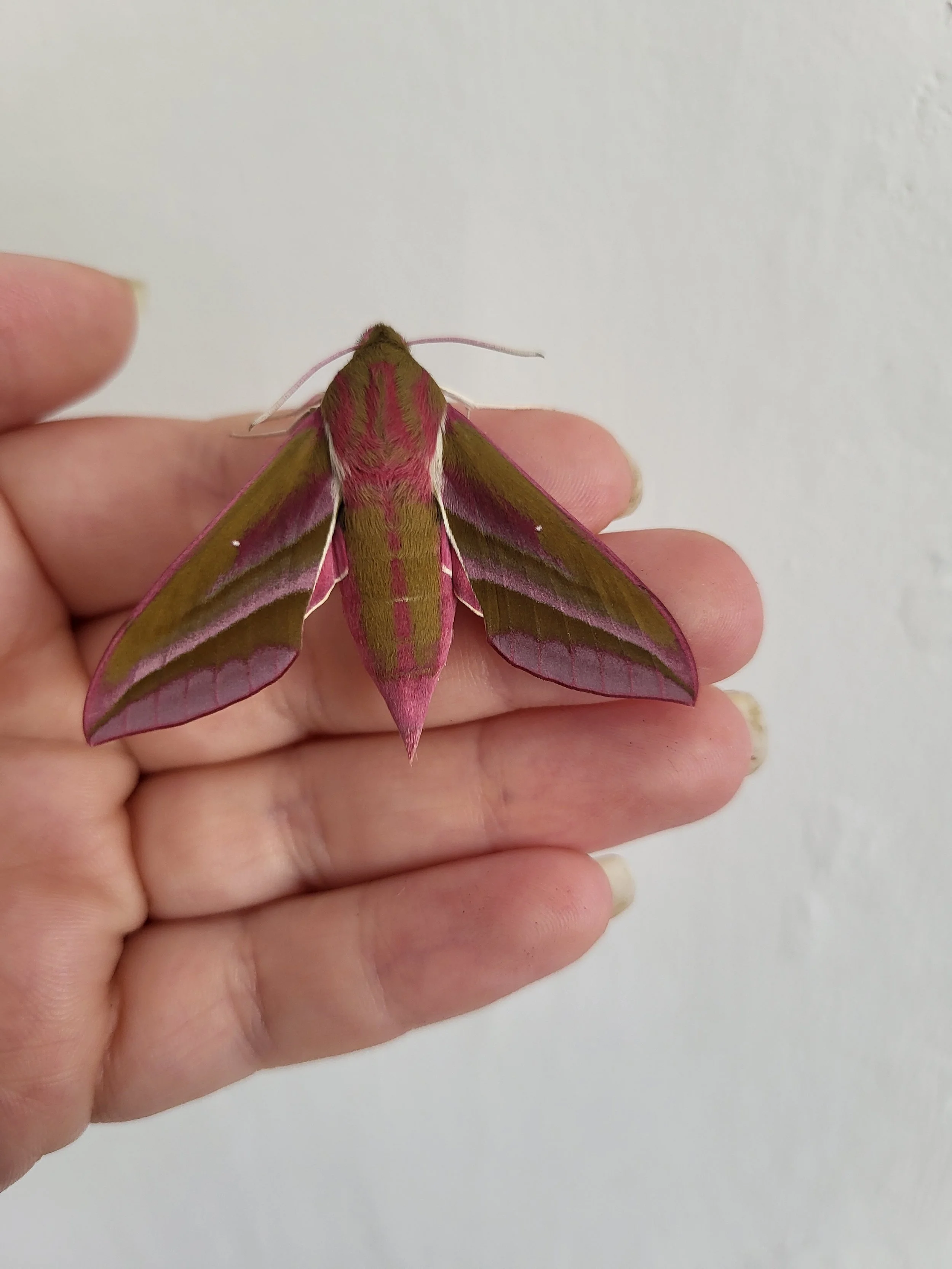
Its bright pink and olive-green colouring makes it difficult to mistake for an ordinary brown moth.
The caterpillar is equally fascinating, developing distinctive markings and an enlarged front section that gives the species its common name.
Adult Elephant Hawkmoths are mainly active at night, visiting flowers with their long proboscis.
Poplar Hawkmoth
The Poplar Hawkmoth is another impressive British species.
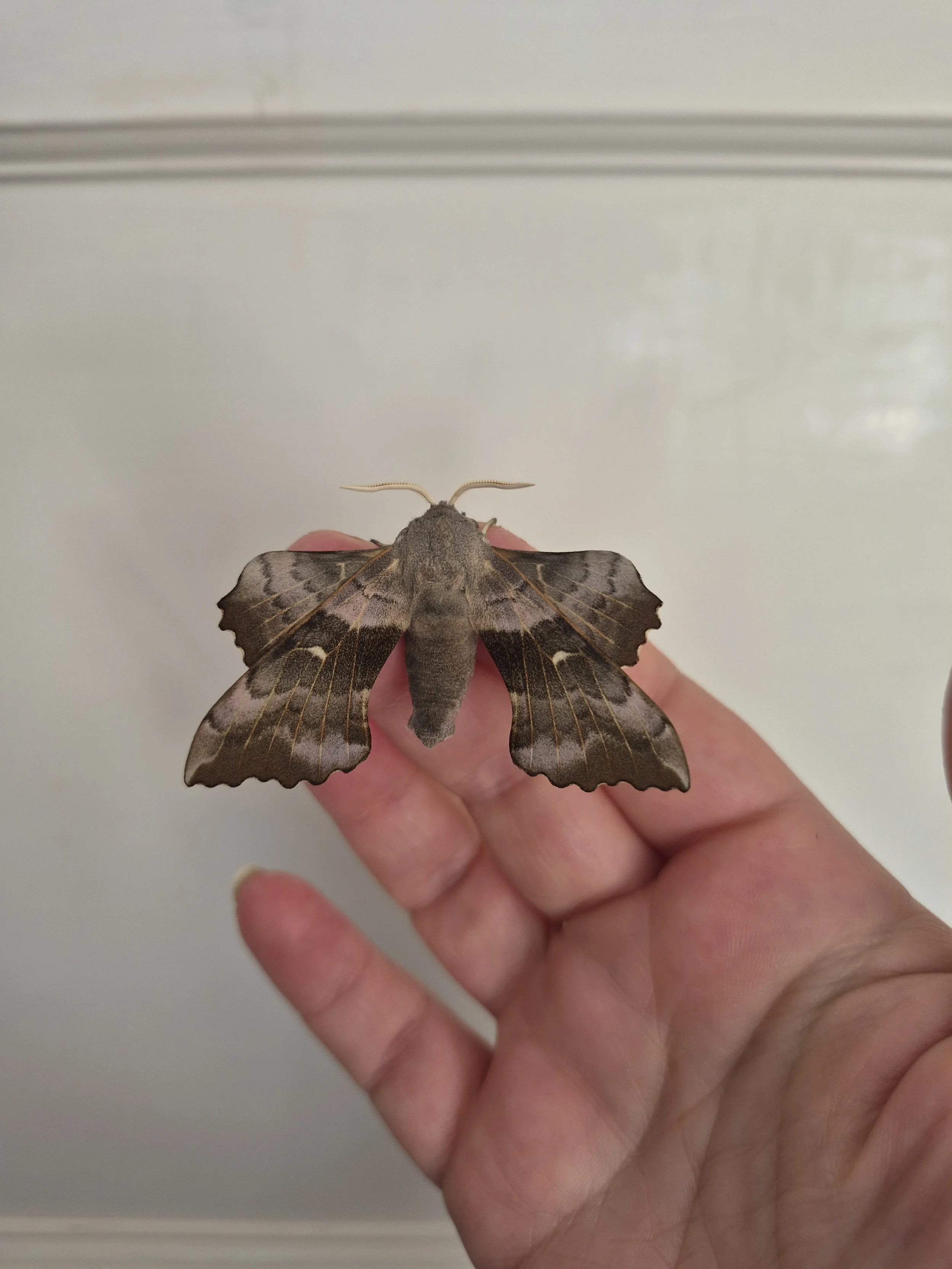
Its muted grey and brown colouring provides excellent camouflage when resting against bark.
Its wings also have a distinctive shape, giving the moth a rather unusual appearance.
Despite being a large moth, it can disappear remarkably well into its surroundings.
Privet Hawkmoth
The Privet Hawkmoth is another spectacular British species.
Adults have a powerful appearance, while the caterpillars can become impressively large.
The species is associated with plants including privet, ash and lilac.
Like many hawkmoths, its caterpillar and adult stages look almost like completely different creatures.
The Mysterious Deaths Head Hawkmoth
Then there's the Deaths Head Hawkmoth.
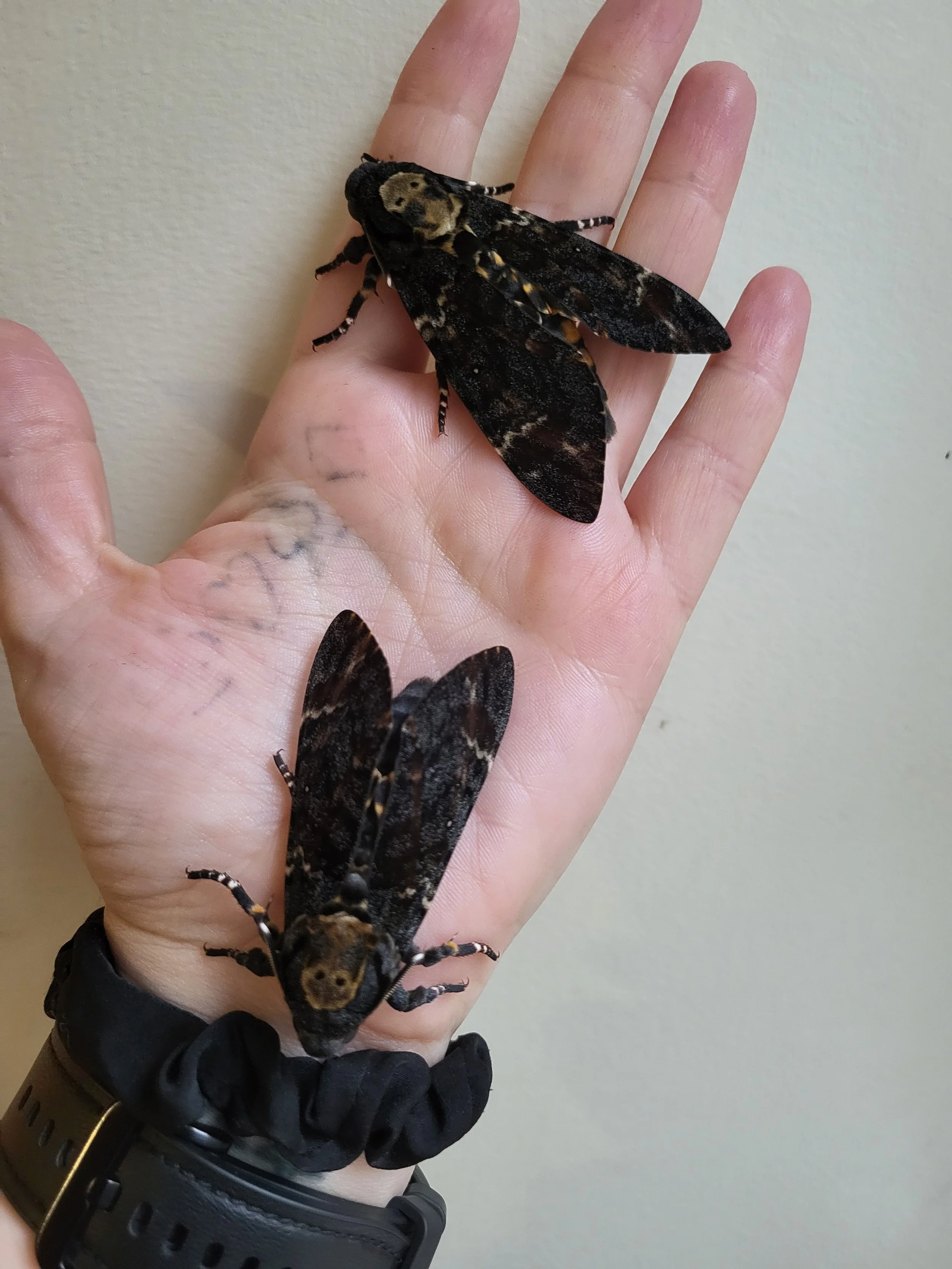
With its skull-like marking, large size and unusual behaviour, it has earned a reputation as one of Britain's most mysterious moths.
The species is particularly interesting because it isn't a permanent resident of Britain in the same way as many native moths.
It is a migrant, with individuals arriving from continental Europe.
Its relationship with honey bees is also unusual.
Deaths Head Hawkmoths can enter bee colonies and feed on honey, and they are capable of producing a distinctive squeaking sound when disturbed.
You can read much more about this remarkable species in The Grimoire's guide to the Death's-head Hawkmoth.
Not All Moths Fly At Night
Another common misconception is that moths are always nocturnal.
Many are. But not all.
There are British moth species that fly during the daytime, including some spectacularly colourful species.
The Hummingbird Hawkmoth
A moth that hovers like a bird!
If there’s one British moth that can make you question what you have just seen its the Hummingbird Hawkmoth.
This remarkable day flying moth beats its wings incredibly rapidly while remaining almost perfectly still in the air. It moves from flower to flower, extending it’s long proboscis to drink nectar without needing to land. The combination of it’s hovering flight, rapid beating wings and orange hindwings make it one of the most recognisable moths you are likely to encounter in the garden. Watch one hovering in front of a flower, and for a moment, it genuinely looks like a tiny hummingbird!
The Cinnabar Moth
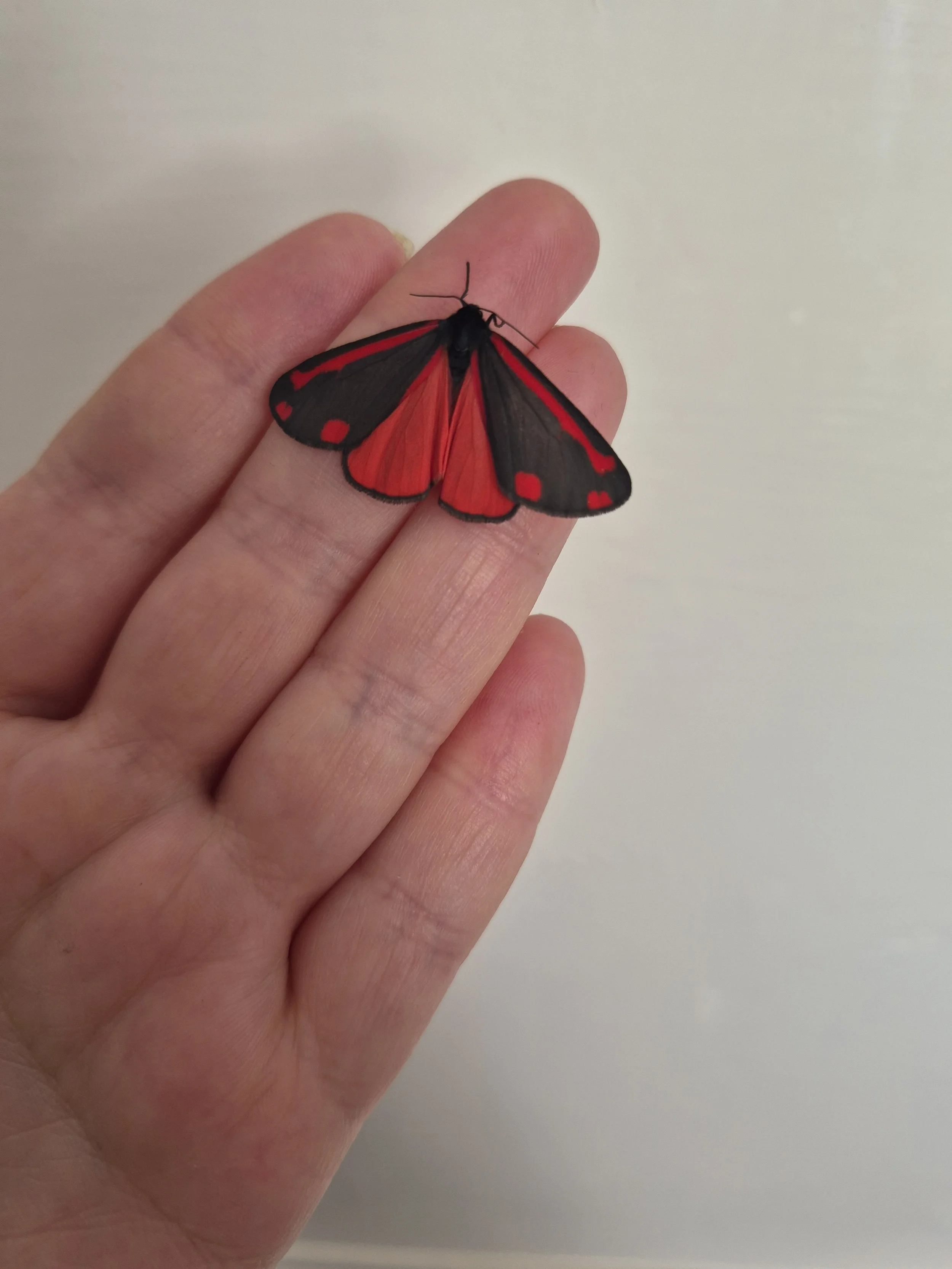
Another example of a day flying moth is the Cinnabar Moth. They are a lovely reminder that British Moths are anything but dull.
With it’s vivid red hindwings and bold red markings across it’s black forewings, this day flying moth can look almost impossibly bright with it suddenly takes flight from a patch of grass or wildflowers
Why Are Moths So Well Camouflaged?
For many moths, camouflage is a matter of survival.
An insect that spends the day resting on a tree trunk doesn't want to advertise its presence to birds and other predators.
So natural selection has produced some astonishing disguises.
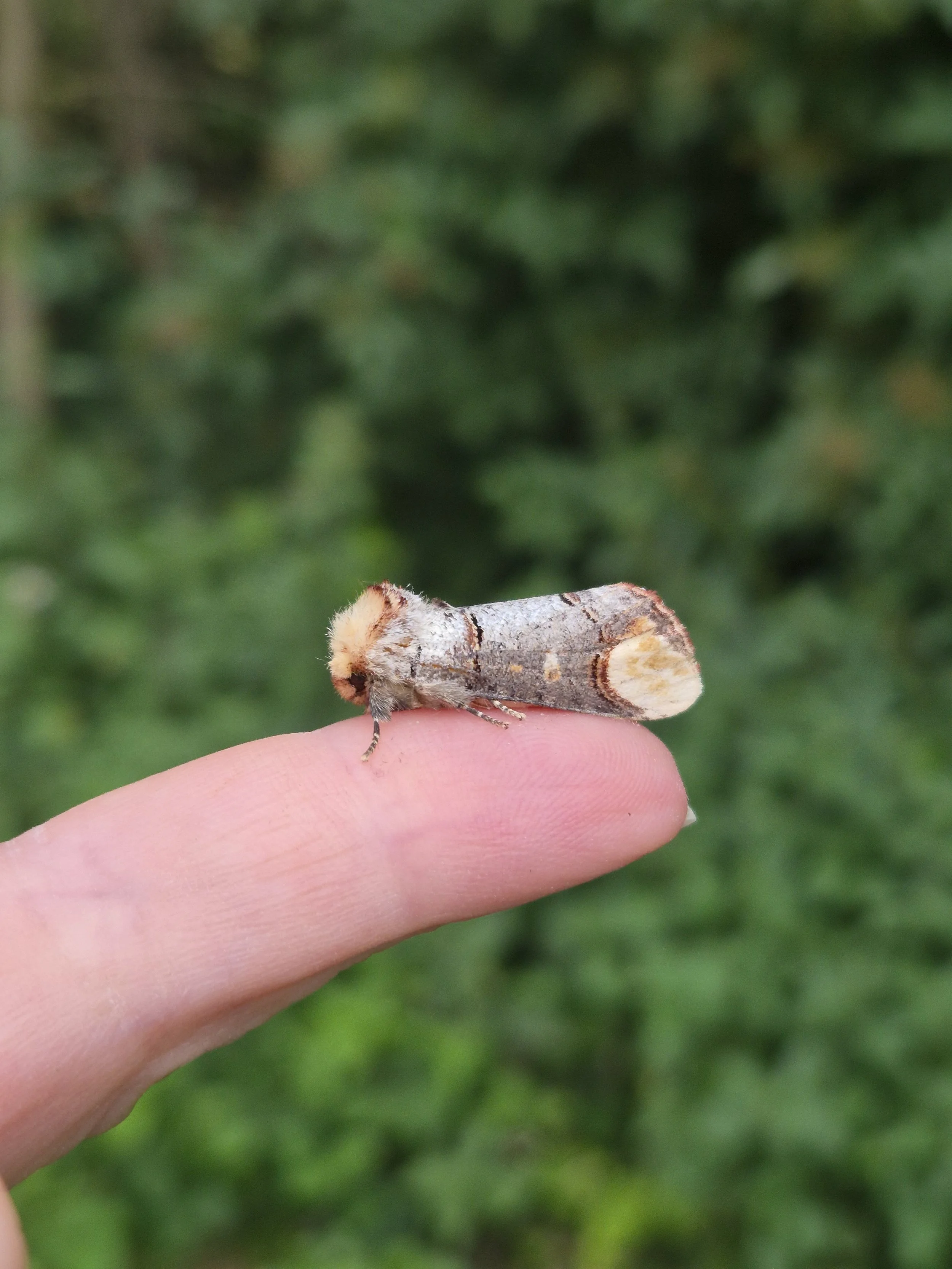
Is it a twig or a moth!? The Buff Tip is a master of disguise!
A moth may resemble:
- Tree bark
- Lichen
- A dead leaf
- Moss
- Grass
- Twigs
- Bird droppings
Some are so well camouflaged that you can stare directly at them and still struggle to see where the insect ends and its surroundings begin.
Moths And Their Host Plants
The relationship between moths and plants is one of the most fascinating parts of their life cycle.
Adult moths may visit flowers for nectar, but their caterpillars often have very different requirements.
A caterpillar needs the right food plant to grow.
This makes plants incredibly important to moth populations.
Many moth species have particular host plants that their caterpillars depend upon.
This is one reason why allowing a little wildness into a garden can be beneficial.
Long grass, native plants, shrubs and areas of vegetation can provide valuable habitat for insects.
Sometimes what looks untidy to us can be incredibly productive for wildlife.
From Caterpillar To Moth
The transformation from caterpillar to adult moth is extraordinary.
A moth begins life as an egg. A tiny caterpillar emerges and begins feeding. It grows through several stages, shedding its skin as it develops. Eventually, it reaches the pupal stage. Inside the pupa, an extraordinary transformation takes place. When the adult moth finally emerges, it can look almost completely different from the caterpillar that came before it.
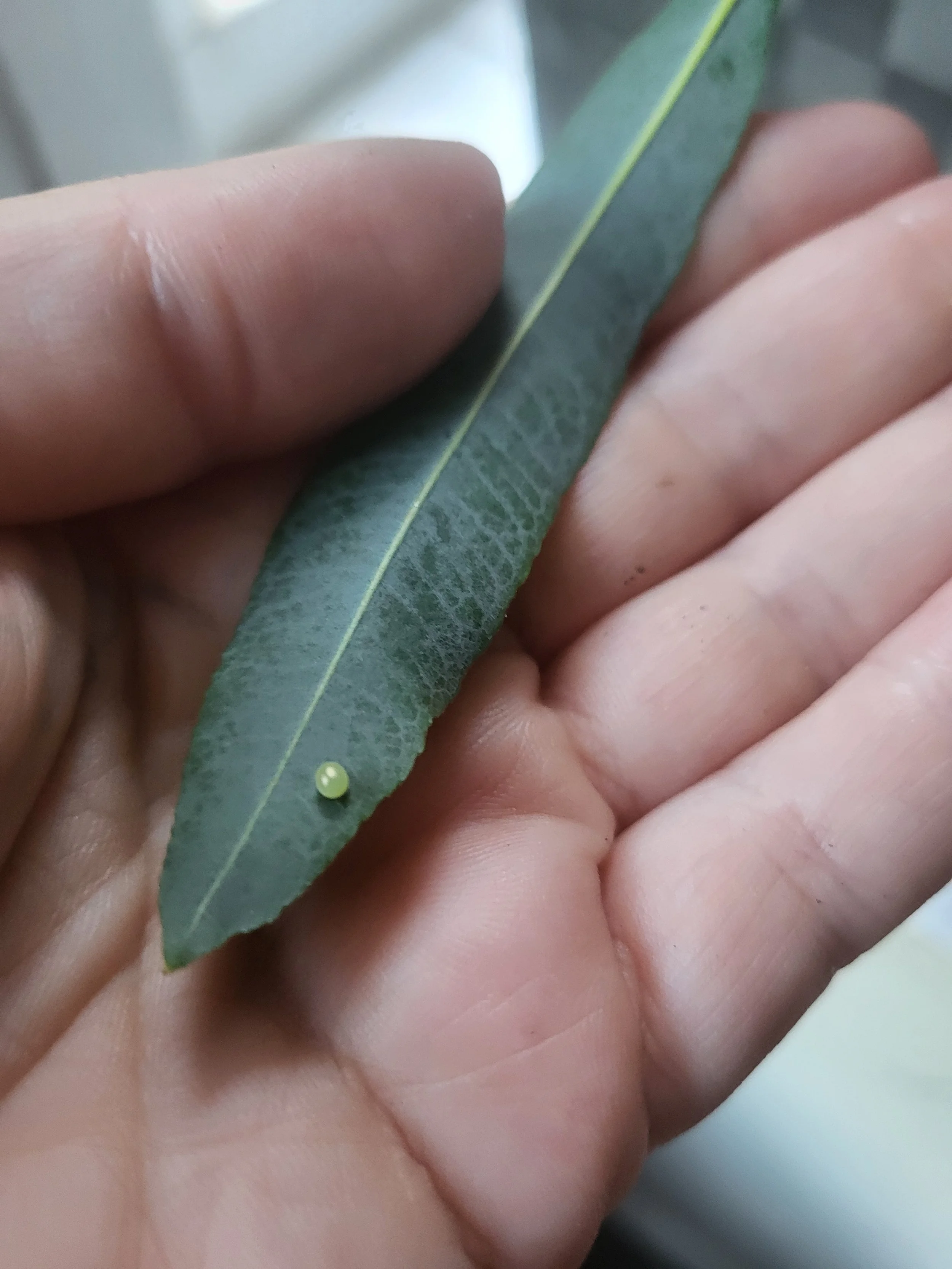
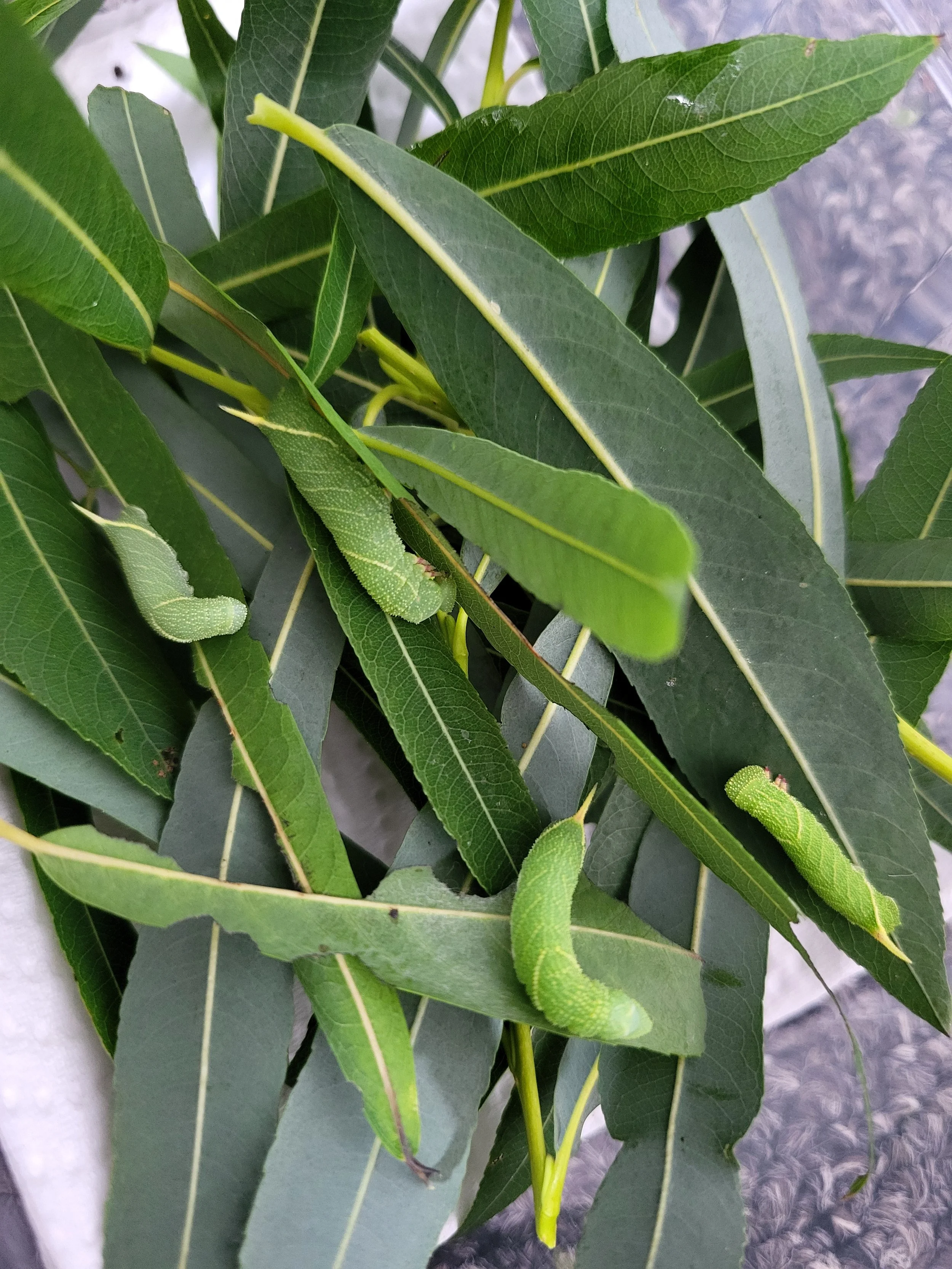
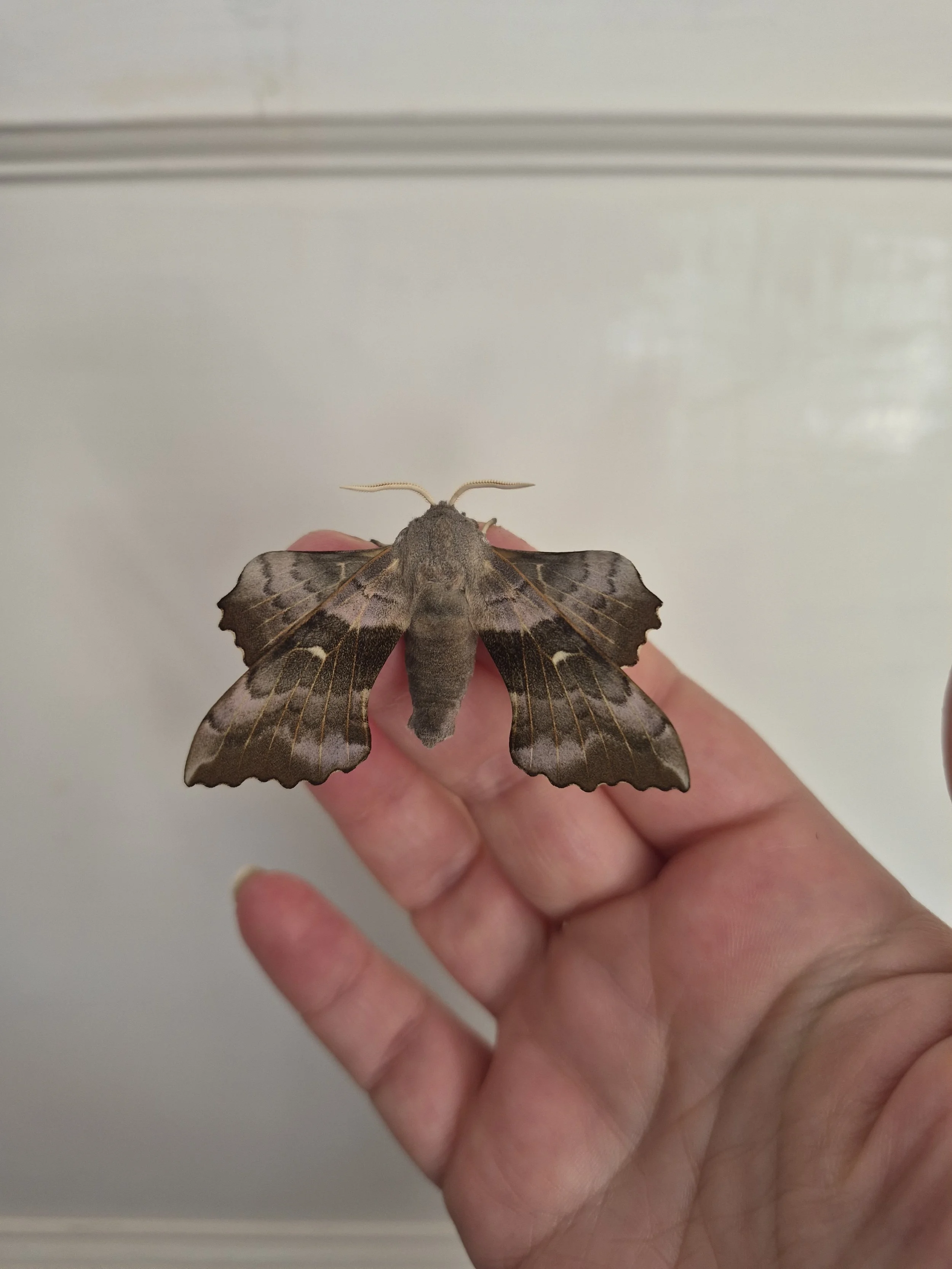
It then needs time for its wings to expand and harden before it can begin its adult life.
The entire process is a reminder that the insect world operates on a scale and timescale very different from our own.
Why Do Moths Come To Light?
If you've ever switched on an outside light and suddenly found yourself surrounded by moths, you've probably wondered why they do it.
The exact mechanisms behind moth attraction to artificial light are complex and still studied by scientists.
Artificial lights can disrupt normal moth behaviour, potentially affecting feeding, movement and reproduction.
This is one reason why reducing unnecessary outdoor lighting can be a simple way of making gardens and outdoor spaces more insect-friendly.
And if you enjoy watching moths, you don't necessarily need to turn your garden into a floodlit spectacle. Sometimes a quiet, dark garden is the best place to observe them.
How To Attract Moths To Your Garden
You don't need specialist equipment to make your garden more welcoming to moths.
Consider planting a variety of nectar-rich flowers and providing different types of vegetation.
Native plants can be particularly useful because they support a wider range of insects and other wildlife.
Avoiding unnecessary pesticides can also help.
And don't be too quick to tidy every corner. Leaf litter, long grass, shrubs and less-managed areas can provide shelter and habitat for insects at different stages of their lives.
You might be surprised by what appears after sunset.
Moths Are Important Pollinators Too
Butterflies and bees tend to receive most of the attention when people talk about pollinating insects.
But moths can also play an important role.
Many adult moths visit flowers to feed on nectar, and in doing so can transfer pollen between plants.
Some species are particularly active at night, visiting flowers that are adapted to nocturnal pollinators. So when the garden becomes quiet and the butterflies and bees disappear, the pollination story doesn't necessarily stop.
Another shift is happening.
The night is waking up.
Why We Overlook Moths
Perhaps one of the strangest things about moths is how little attention they receive compared with butterflies.
Butterflies are brightly coloured, active during the day and relatively easy to notice.
Moths are often hidden. They work through the darkness. They camouflage themselves.
They spend much of their lives as caterpillars. And many are small enough to pass unnoticed.
But once you start looking, it's difficult to stop.
A moth resting beside a window can become an unexpected discovery.
A caterpillar found on a plant can turn into an identification mystery.
A walk at dusk can reveal an entirely different world.
The joy of moth identification
One of the best ways to become more interested in moths is simply to start identifying them.
You don't have to know thousands of species. Start with the obvious ones.
Learn a handful of common British moths.
Notice their colours and shapes. Pay attention to where you find them. Look at the plants around them. Then gradually add more species to your mental collection.
Before long, you'll start noticing moths that you previously would have walked straight past.
Moths As Natural History Art
This fascination with moths is one of the reasons I love preserving them.
A framed moth allows you to stop and really look. You can see the scales that would normally blur past in flight. You can study the shape of the wings. You can appreciate patterns that camouflage the insect in its natural environment. Something that might otherwise be overlooked becomes the centre of attention.
That's what natural-history art can do.
It makes us look closer.
The Strange Beauty of Moths
Moths don't need to compete with butterflies.
They have their own beauty. Sometimes it's obvious. Sometimes you have to look for it. A brightly coloured hawkmoth can be spectacular. A tiny brown moth might be fascinating because of the incredible camouflage that allows it to disappear against bark. A day-flying moth can challenge everything you thought you knew about moths. And a nocturnal species can reveal an entire world that exists while most of us are asleep.
Once you start paying attention, moths stop being background insects.
They become something worth searching for.
Look Into The Darkness
The next time you see a moth fluttering around a light, stop for a moment.
Look closely, and ask yourself:
What does it look like?
Where did it come from?
What plant did its caterpillar feed on?
How long has it been alive?
Where will it go when the light disappears?
There is an entire hidden world of British moths happening around us.
You simply have to start looking.
And once you do, you may never see the darkness quite the same way again.
---
If you've developed a fascination with these nocturnal creatures, explore the Framed Moths collection at Evil Eye Curiosities and discover some of the incredible forms, colours and patterns found within the world of Lepidoptera.
