THE DEATHS HEAD HAWKMOTH: NATURE’S MOST MYSTERIOUS MOTH
Few insects have a reputation quite like the Deaths Head Hawkmoth.
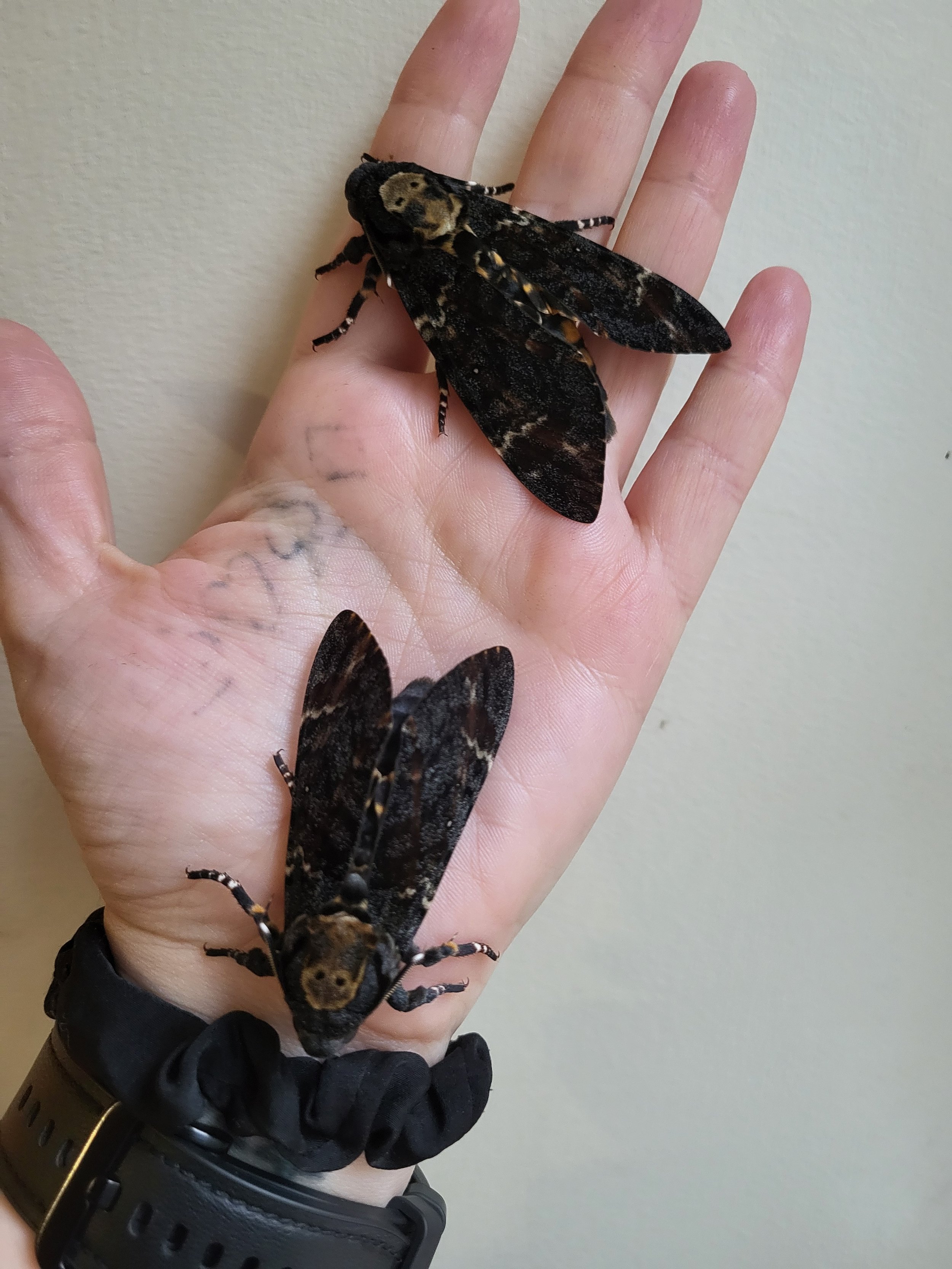
Large, dark and unmistakable, with a skull-like marking across its thorax, this extraordinary moth looks as though it has wandered straight out of a Victorian cabinet of curiosities.
Its appearance has inspired folklore, superstition and stories of death for centuries. But behind the eerie reputation is a fascinating piece of natural history — a powerful flying moth with an unusual relationship with honey bees, a remarkable ability to make a squeaking sound and a life cycle that takes it through some surprisingly dramatic stages.
So, what makes the Deaths Head Hawkmoth so unusual?
Meet the Deaths Head Hawkmoth
The species most commonly known as the Deaths Head Hawkmoth is Acherontia atropos, a member of the hawkmoth family Sphingidae.
It is an enormous moth.
In Britain, it can reach a wingspan of around 12 centimetres, making it the largest moth species recorded here. It isn't native to Britain, however. Instead, it arrives as a migrant from southern Europe and can sometimes be encountered in Britain during late summer and autumn.
It’s size alone makes it impressive.
But then you notice the marking on its back.
And everything becomes a little stranger.
The skull on its back
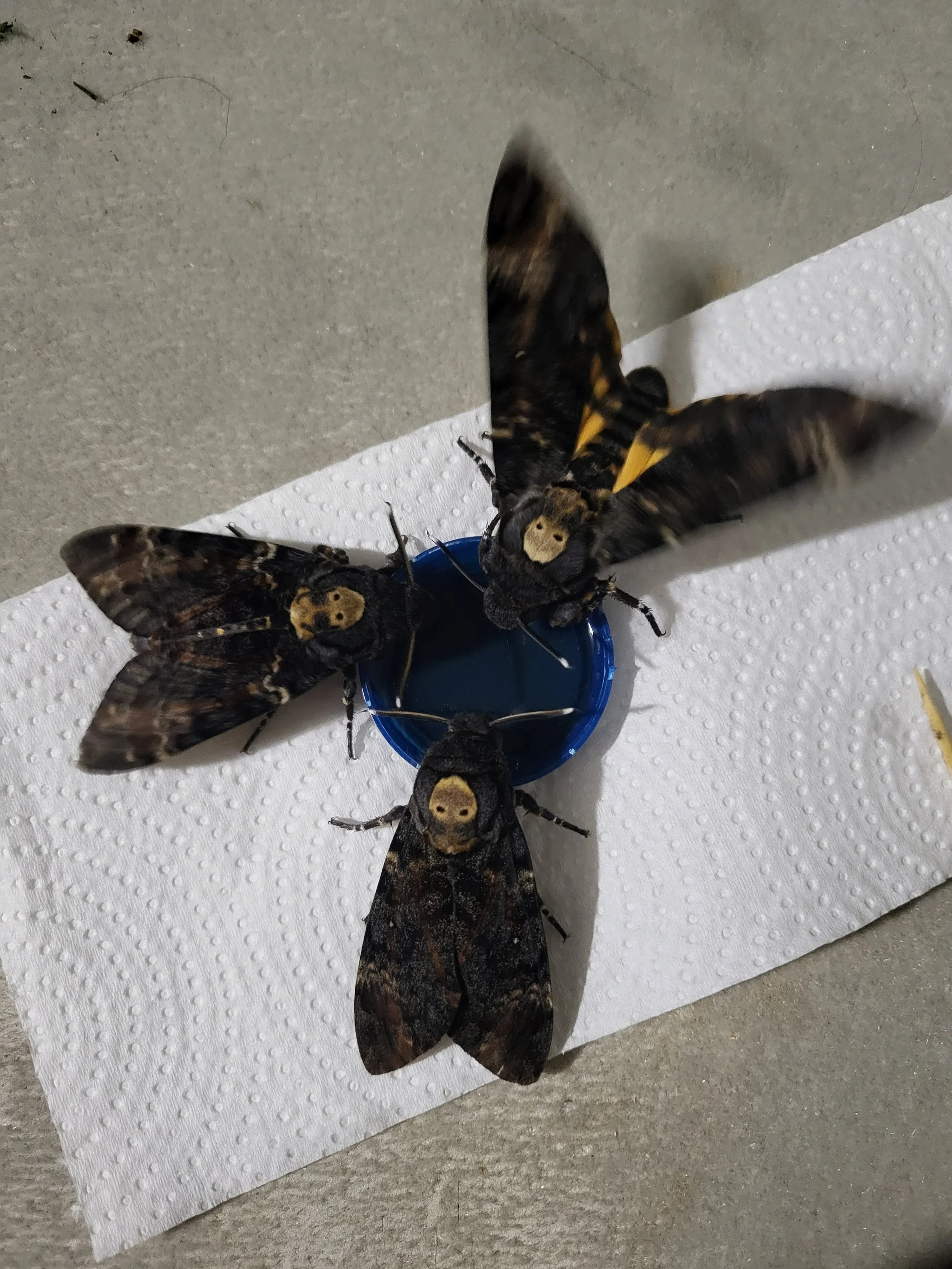
The feature that gives this moth its name is the pale marking on its thorax.
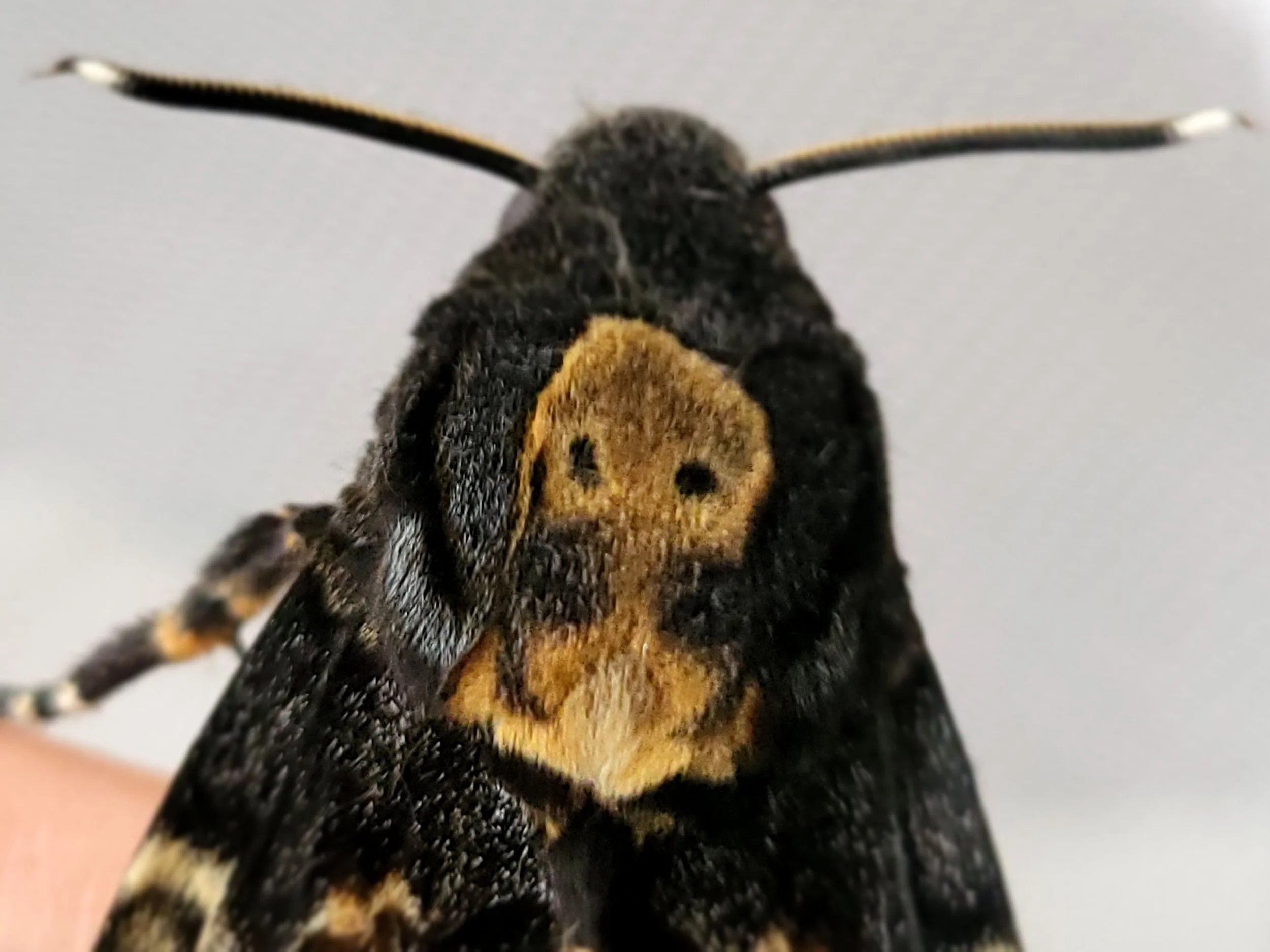
Viewed from above, the pattern can resemble a human skull.
It isn't actually a skull, of course — it is made from the moth's natural colouring and scales — but the resemblance is remarkably striking.
For centuries, this unusual marking has helped give the species an association with death and the supernatural. Even its scientific name has an appropriately dark origin.
Acherontia refers to Acheron, one of the rivers associated with the underworld in Greek mythology, while atropos refers to Atropos, one of the three Fates, whose role was to cut the thread of life.
It's difficult to imagine a more suitably gothic name.
Is The Skull Really A Skull?
One of the fascinating things about natural history is that even familiar-looking features can have more complicated explanations.
The skull-like pattern may simply be an example of visual resemblance that happens to look remarkably familiar to humans.
There has also been scientific discussion about whether the moth's unusual markings could play a role in deterring predators.
Deaths Head Hawkmoths are also well known for infiltrating beehives and stealing honey, that skull doesn’t only look like a skull, it also looks like the face of a bee!
Either way, the effect is extraordinary.
A moth lands on a tree trunk.
You look closer.
And suddenly you're staring back at what appears to be a tiny skull.
Nature has a talent for theatre.
The Moth That Raids Beehives
Perhaps the strangest thing about the Deaths Head Hawkmoth isn't its appearance.
It's what it does after dark.
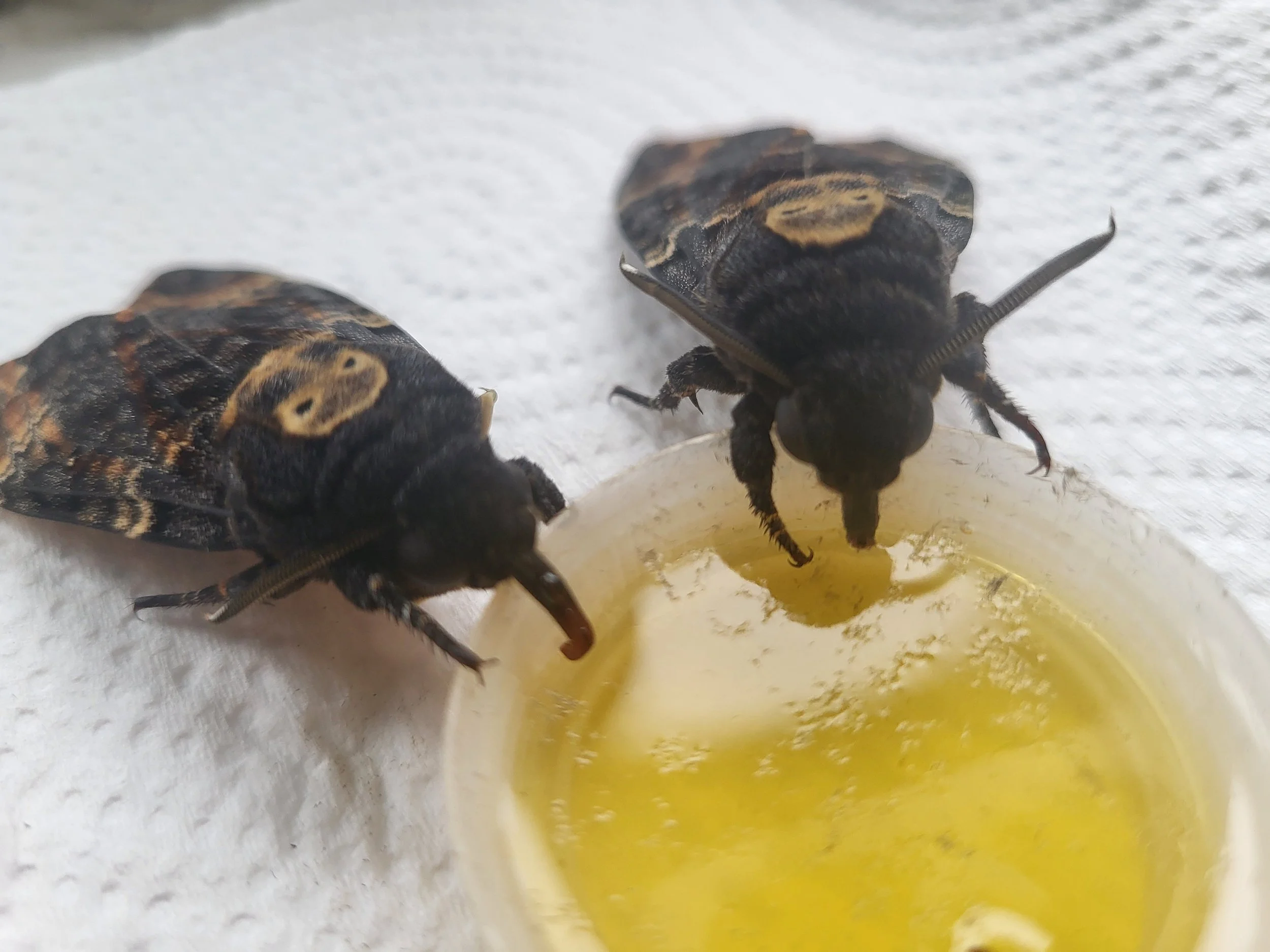
This species has a remarkable habit of entering honey bee colonies to feed on honey. Its short, powerful proboscis is adapted for accessing honey inside the hive.
This is particularly unusual behaviour for a moth.
Even more remarkable is the fact that the moth has adaptations that help it move around inside a bee colony.
Research has found that Acherontia atropos has chemical characteristics that can make it difficult for honey bees to recognise the moth as an intruder. Its body is also heavily scaled and robust, providing some protection from attacks.
It's essentially a honey thief with wings.
And Yes — It Can Squeak
If the skull marking wasn't strange enough, the Deaths Head Hawkmoth has another trick.
It can squeak.
When disturbed or handled, the moth can produce a surprisingly loud sound by drawing and expelling air through structures associated with its proboscis. The result is an unusual squeaking or chirping noise.
For such a large moth, it's an unexpectedly dramatic defence.
Imagine finding one in your garden at night, picking it up carefully — and hearing it squeak.
It certainly adds to the legend.
Why Does It Visit Beehives?
The Deaths Head Hawkmoth's relationship with honey bees is one of the most fascinating examples of insect behaviour.
Rather than simply landing on flowers like many other moths, Acherontia atropos is equipped to exploit a completely different food source.
Its short, sturdy proboscis is particularly suited to feeding from honeycomb, while its body chemistry appears to help it avoid being recognised immediately as a foreign intruder.
The exact details of how the moth and bees interact are more complicated than some of the traditional stories suggest, and scientists have debated the mechanisms involved.
But the basic behaviour is well documented:
The Deaths Head Hawkmoth enters beehives and feeds on honey.
Not bad for a creature that looks like a tiny omen of doom.
What Does The Caterpillar Look Like?
The adult moth is dramatic, but its caterpillar is almost an entirely different creature.
The caterpillars can grow very large and may occur in several colour forms.
They are often greenish or yellowish with striking markings (although occasionally you’ll see them in their brown form instead!) and have the characteristic tail horn associated with hawkmoth caterpillars.
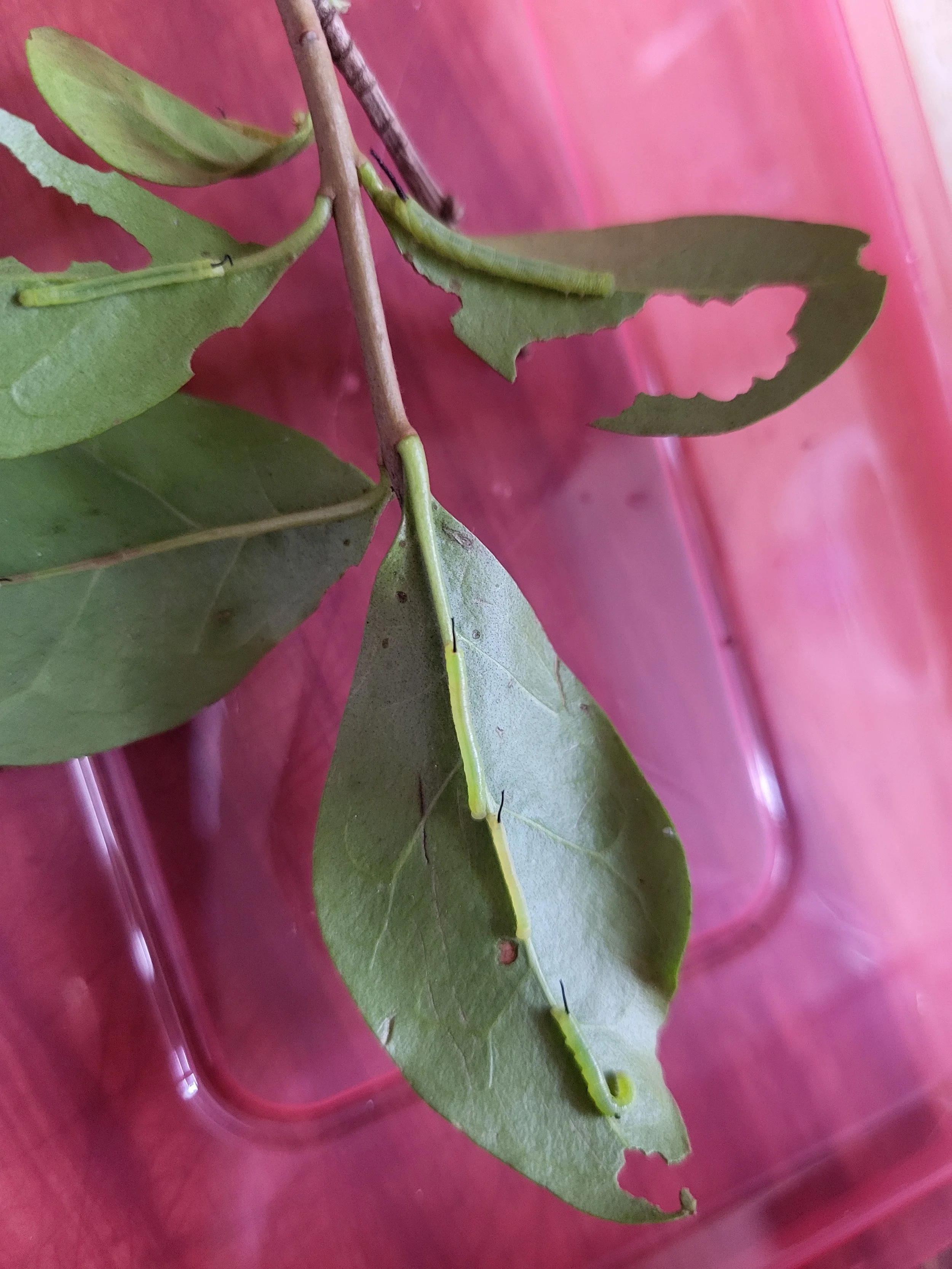
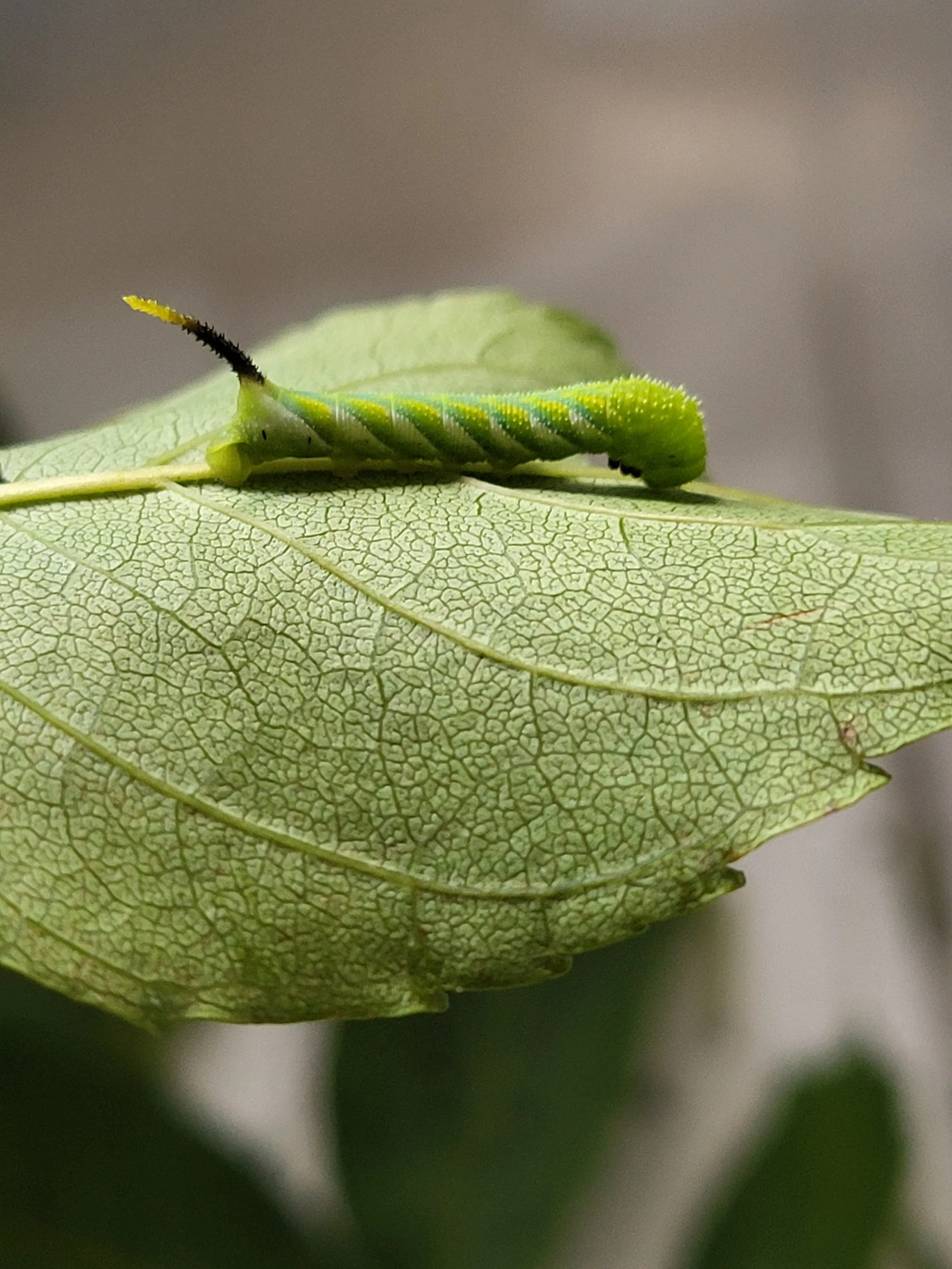
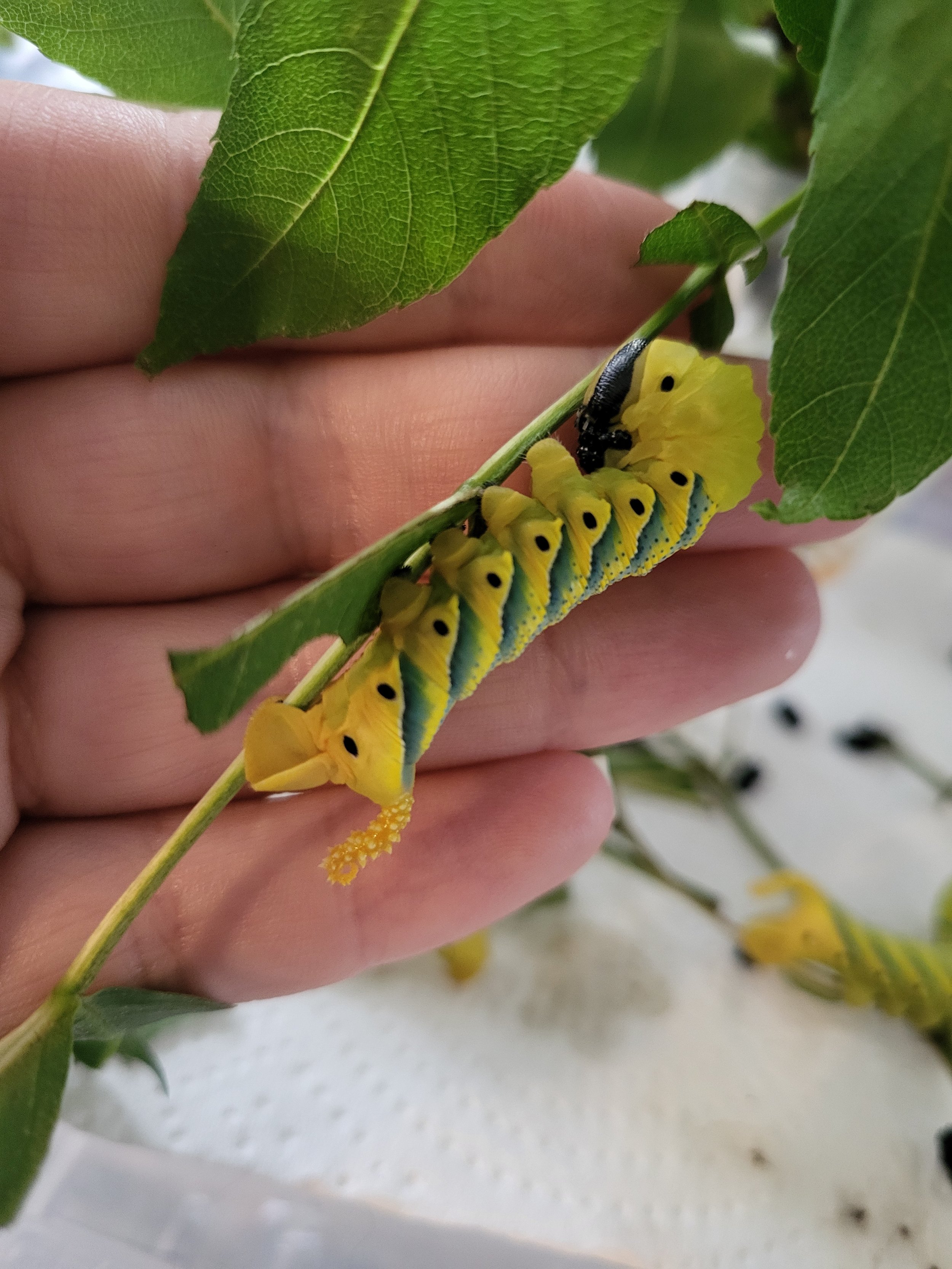
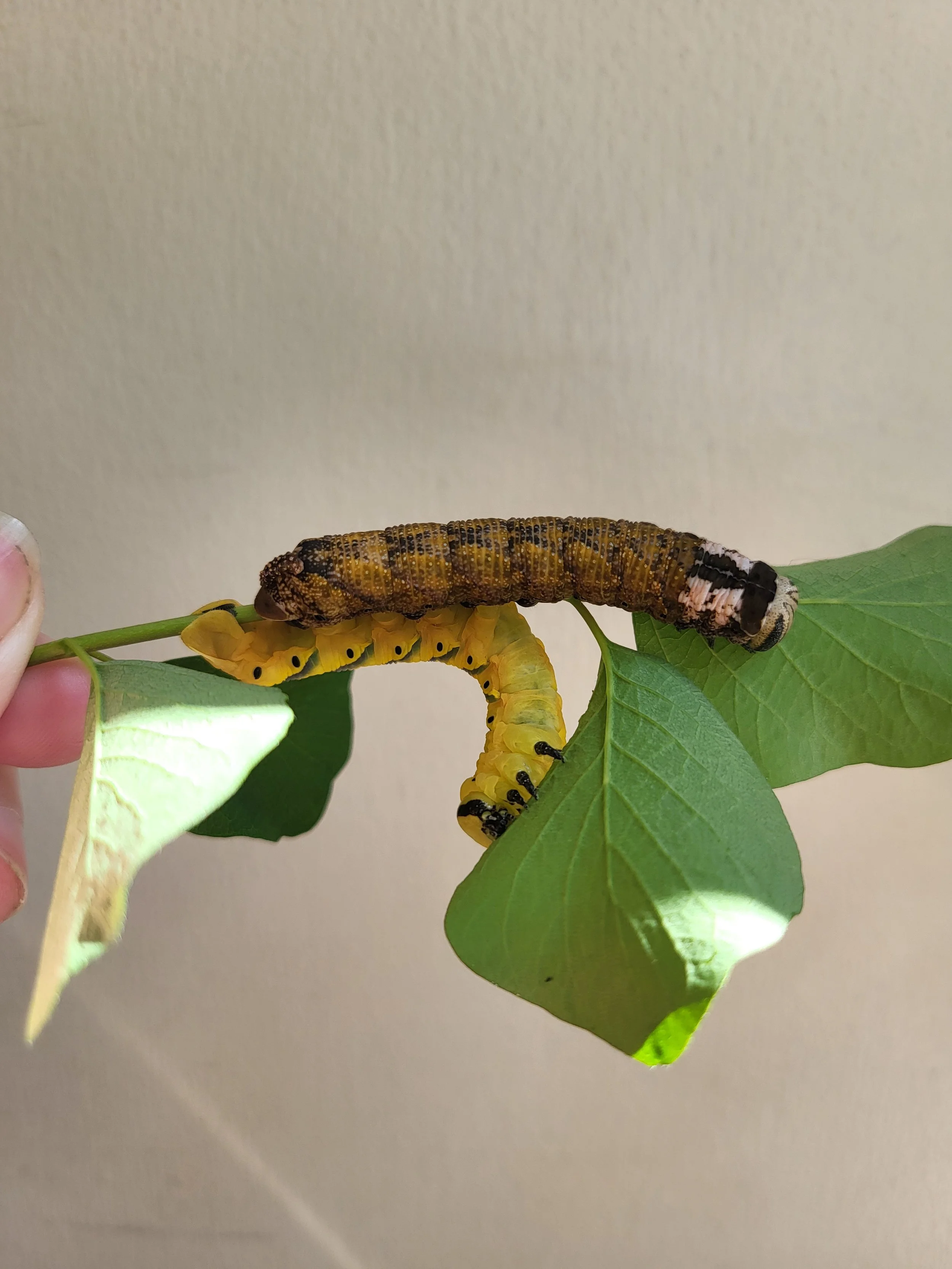
One of their known food plants is potato, and caterpillars have occasionally been recorded feeding on potato plants during good years for the species, however when raising in captivity the most common host/food plant is privet - which is available year round.
Eventually, the mature caterpillar leaves the plant and burrows into the soil, where it pupates underground.
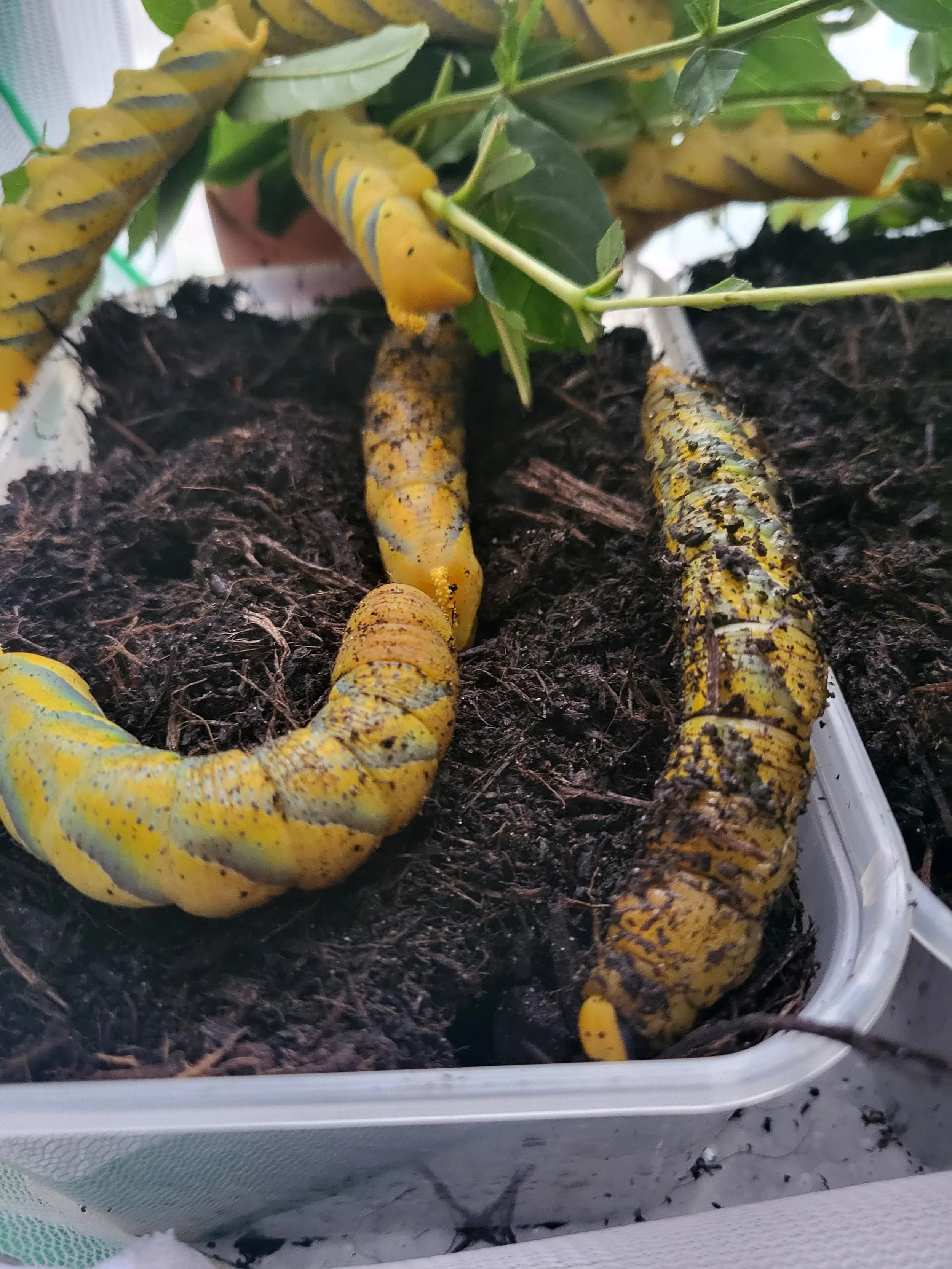
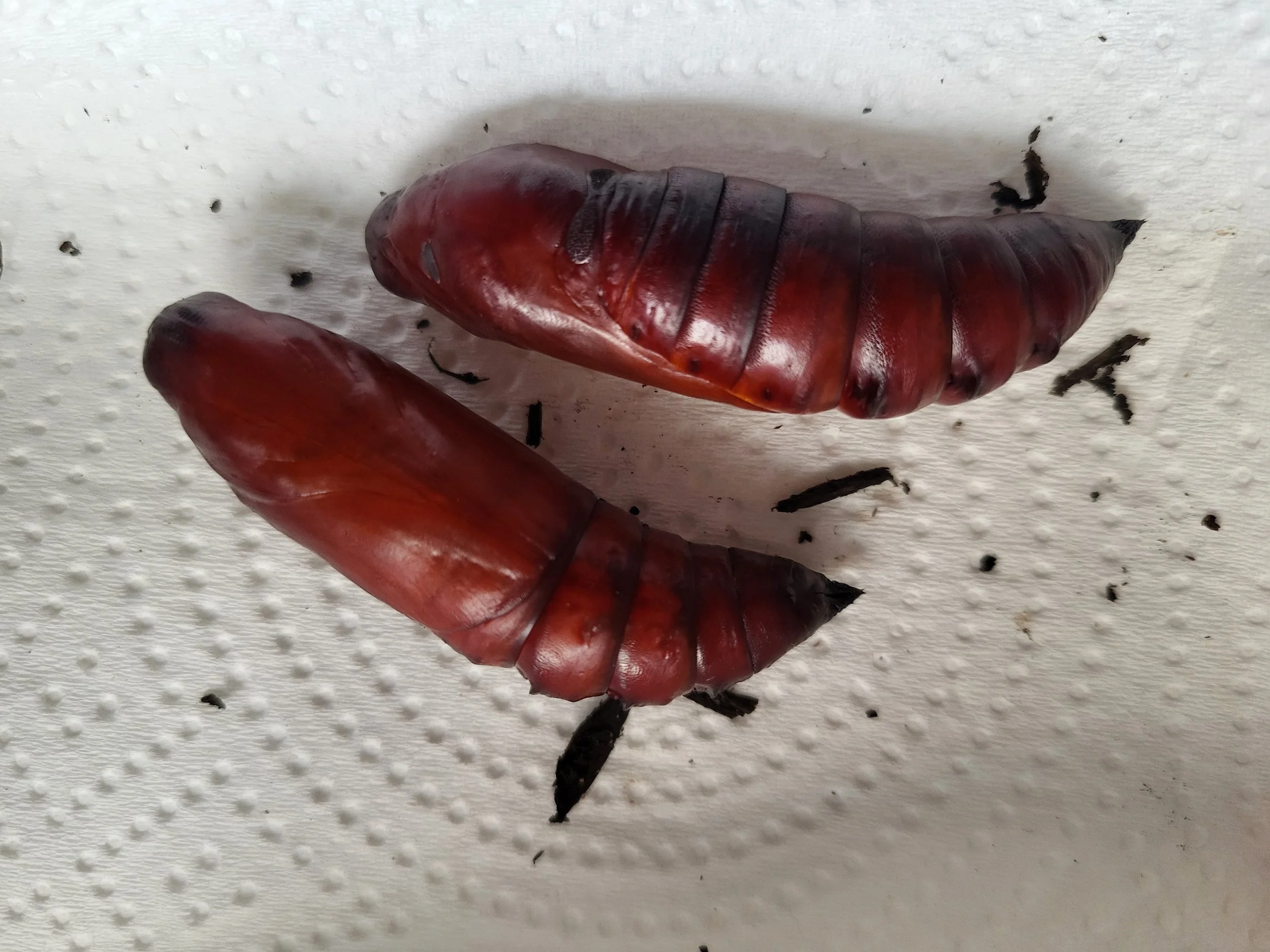
From there, one of the most spectacular moths to visit Britain emerges.
A Rare Sight In Britain
They are a rare sight in Britain. In hot summers they are occasionally found, and caterpillars are often found which means they are managing to breed here - however our winters are still too cold and they generally do not mange to pupate successfully here. As we begin to see milder winters and warmer summers, that may change and we may begin to see them more often and being more successful and established, but time will tell.
Despite its size, you are unlikely to encounter a Deaths Head Hawkmoth on an ordinary walk.
In Britain, Acherontia atropos is an uncommon migrant, with adults arriving from southern Europe, generally during late summer and autumn. It has been recorded across Britain, although records are particularly associated with southern and eastern areas.
Good migration years can produce an increase in sightings. Adults may be attracted to lights, while others have been discovered resting during the day. And because they're so enormous and distinctive, finding one would be an unforgettable experience.
A Moth Surrounded By Folklore
It's easy to understand why this species acquired its dark reputation.
A huge nocturnal moth. A skull-like marking. A strange squeaking call. A habit of entering beehives. And a scientific name connected with the underworld and death.
Long before modern entomology explained its biology, people naturally created stories around such an unusual creature. The moth has appeared in literature and popular culture, helping to cement its association with mystery and death.
But perhaps the real story is even more interesting than the folklore.
There is no supernatural creature hiding behind the skull.
There is simply an extraordinary piece of evolution.
Why I Find The Deaths Head Hawkmoth So Fascinating
This is exactly the kind of creature that makes natural history so addictive.
At first glance, you see the skull. Then you discover the enormous wingspan. Then the beehive raids. Then the squeaking. Then the caterpillar. Then the migration.
And suddenly what looked like a strange picture on a moth's back has opened the door to an entire world of biology.
That's what I love about specimens.
They give you an opportunity to stop and really look.
You can examine the wing structure, the patterning, the scales and the tiny details that might otherwise disappear in the darkness.
Preserving Something Extraordinary
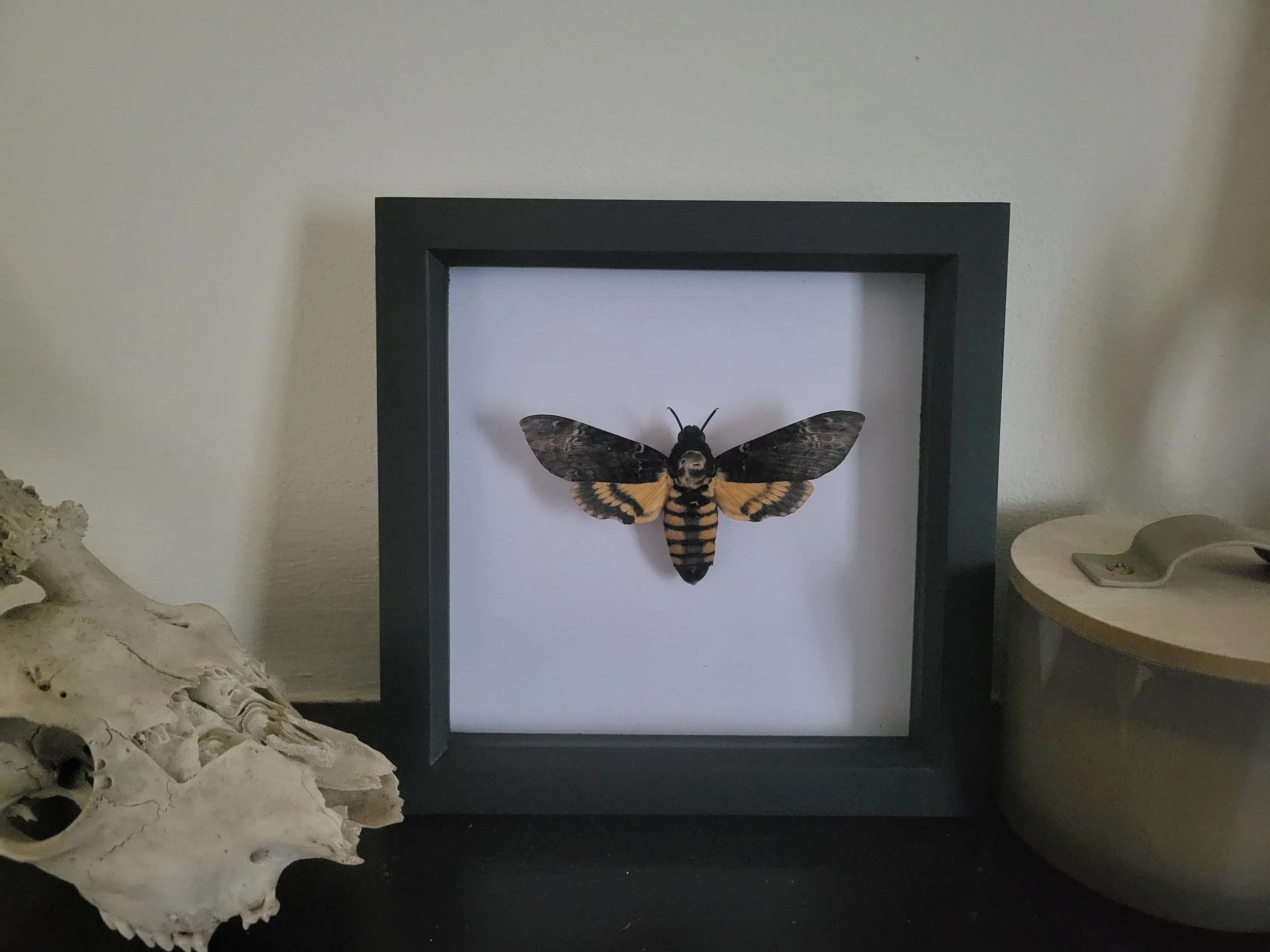
A preserved specimen can capture a moment in natural history and allow it to be appreciated long after the insect has disappeared into the night.
For me, this is what makes natural-history art so fascinating. It's not simply about owning something unusual. It's about looking closer.
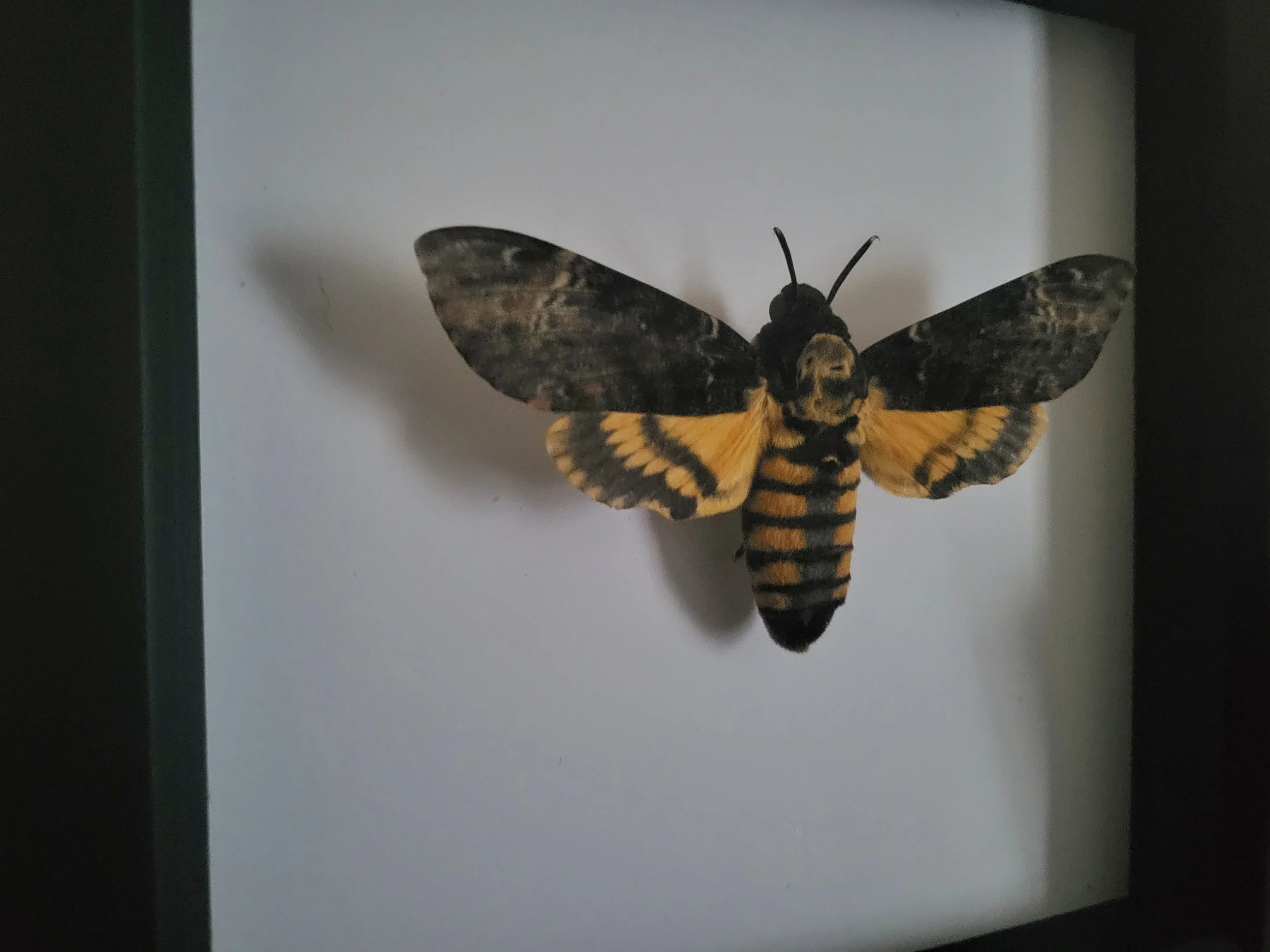
A framed specimen can become a conversation piece, a study object or simply something beautiful and strange to have hanging on the wall.
And the Deaths Head Hawkmoth is certainly difficult to ignore.
From The Night Into The Cabinet
There is something wonderfully appropriate about the Deaths Head Hawkmoth finding its way from the darkness into a cabinet of curiosities.
It has everything a natural-history enthusiast could ask for:
Beauty.
Strangeness.
Science.
Folklore.
And just a hint of the macabre.
Perhaps that's why this particular moth has fascinated people for so long.
The next time you see a moth fluttering around a light at night, take a second look.
Because somewhere out there, beneath the darkness, there may be a creature carrying one of nature's most recognisable little mysteries on its back.
And sometimes, the things that look the most sinister are simply the things we haven't looked closely enough at yet.
---
Discover the Deaths Head Hawkmoth and other framed natural-history specimens at Evil Eye Curiosities, or continue exploring The Grimoire for more stories about insects, curiosities and the strange side of the natural world.